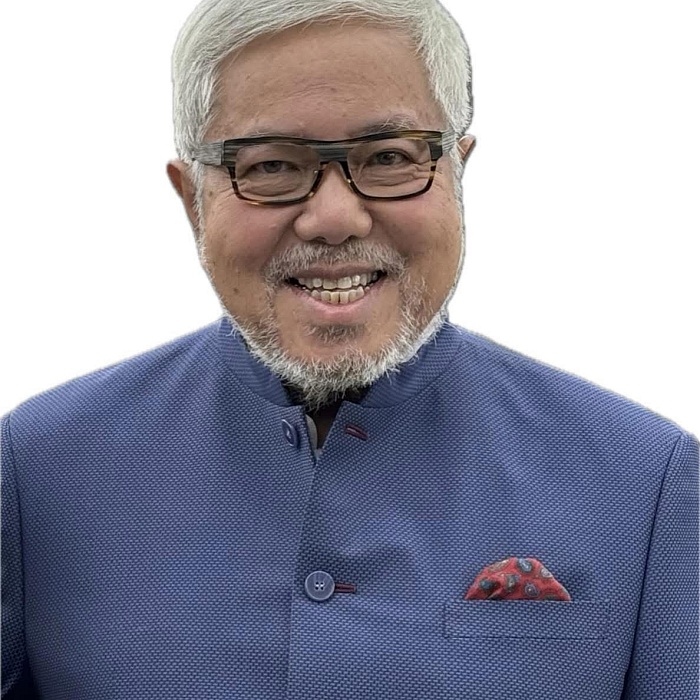
Six minutes into a presentation on the science of healthy aging, Peter Wayne, a researcher and professor at Harvard Medical School, takes a pause from his slides. As if performing a martial arts maneuver, Peter flows from dense objective data to subjective experience in a seamless and imperceptible way. In a blue button-down shirt and slacks, he stands up, gently rocks his weight side to side, and invites the audience to do the same. His voice is soft, rhythmic: “Gentle movement helps us feel. Be curious which parts of your feet you can feel, and which parts are a little less awake. Pour your inner ocean side to side. Notice how juicy your joints are.” Fifteen minutes later, he glides back into his chair to explain the concepts of what everyone just experienced.
Not the typical scientific talk. But Peter isn't the typical scientist. He’s an esteemed researcher—the principal investigator for over 35 studies sponsored by the National Institutes of Health, and co-author of over 200 peer-reviewed articles. The primary subject of his research is holistic healing methods, especially tai chi and qigong. Both are described as moving meditations that originated in China (several hundred years ago for tai chi, and several thousand years ago for qigong), and Peter can sometimes can be caught doing a playful demo with others. Tai chi is considered an “internal martial art,” focusing on the inner state of energy flow to generate power and movement. And Peter is an internationally recognized teacher of this art.
Peter came to tai chi during high school in New York City. His gateway was sports—“What can I do to up my game?”—and he knew certain types of martial arts could help with focus and stamina. With tai chi, though, he discovered two other aspects: the Eastern traditions and philosophies, along with the profound healing power of this art. These three integrated dimensions served as his initial hook.
He went on to study ecology and evolutionary biology, with the initial tai chi hook only deepening. Over the next 40 years of a nonlinear journey, he encountered illness, the aging process, and challenges in work-life balance, teaching him to embody tai chi principles in his everyday life. He also brought it into his research, studying both disease-specific outcomes, like for Parkinson’s disease, heart disease, chronic pain or cancer; and also general outcomes like overall health, vitality, and wellbeing. In the context of placebo research and imagery science, he explains, even the names of the tai chi moves, like ‘Waving Hands Like Clouds” or “White Crane Spreads Its Wings,” can elicit a healing effect.
His friends often joke that Peter is “half Chinese, and it’s the inside half.” His teachers have been both incredible instructors and guides, with his deep study taking him to China in 2000, where he received a certification from the World Academic Society of Medical Qigong. In tai chi and other Eastern traditions, practitioners learn by teaching. He sees similarity in medicine, where there’s a saying, “See one, do one, teach one.” It isn’t until you have to teach others, and translate your own experiences and understanding of the information and practices, that the learning deepens.
With his characteristic humility, he says, “I still feel like I’m scratching the surface of this rich art. The more I learn, the more interesting it gets, and the more intrigued I am to dive deeper, to see what I can learn myself and also what I can share with others.”
Peter is the Bernard Osher Associate Professor at Harvard Medical School and Director of the Osher Center for Integrative Health. Beyond tai chi and qigong, his research examines other holistic modalities like acupuncture and chiropractic care. He is the founding director of the Tree of Life Tai Chi Center, and is the co-author of Harvard Medical School Guide to Tai Chi, which received an Award of Excellence in Medical Communication by the American Medical Writers Association.
Please join us in part-conversation/part-embodied workshop with this translator and teacher of East-West wisdom, and integrator of “mindbodyspirit.”