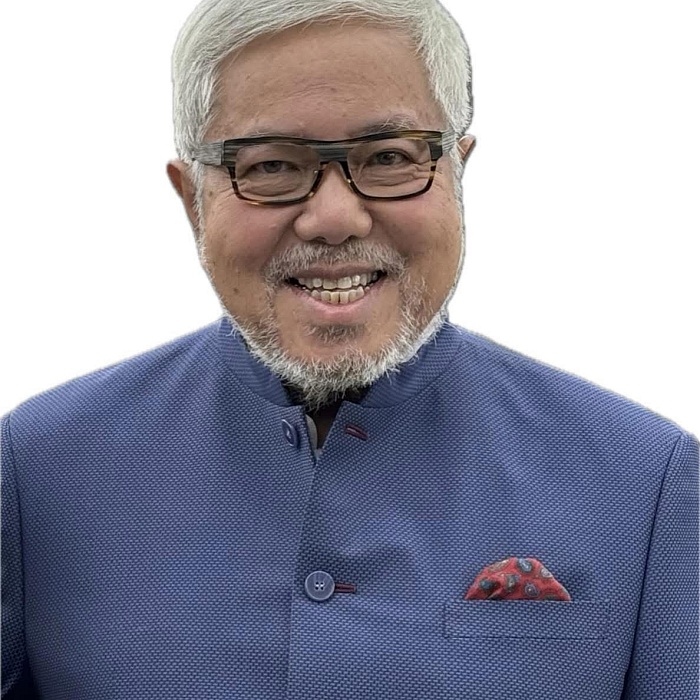
Rudy Karsan walks onto the stage looking the part of a successful entrepreneur: charcoal suit, wired microphone, confident stride. What catches your attention is the smile—wide, unguarded, unmistakably joyful. At this point in his life, he calls his deepest aspiration being an “exporter of joy,” which he defines as a state when “the heart is open and expansive, and the mind is silent, or mostly silent.”
This isn’t the joy that business success brought him. A self-described “flaming failure” at most of his dozen startups, Rudy did eventually build one that took off: Kenexa, a human resources software company he grew over 25 years and sold to IBM for $1.3 billion in 2012. What followed surprised him—nights of “loneliness, emptiness, and lack of purpose.” He sold his Ferrari, downsized from 9,000 square feet to 2,000, and pared down to seven pairs of pants. In his subsequent role as an investor at Karlani Capital, he began asking founders not about their business plans, but about their relationship with death.
One and a half decades later, stillness of mind through meditation and openness of heart through deep listening define his work. These practices led him to co-found Funcon, short for “fun conversations,” where dialogue becomes a vehicle for joy, growth, and kinship.
The son of Ismaili Muslim immigrants, Rudy earned a mathematics degree from University of Waterloo and became Canada’s youngest credentialed actuary by the age of 25. In 1987, he co-founded what would become Kenexa, a global company that reshaped how organizations understand people in the workplace. He later co-authored the New York Times bestselling book, We, drawing on data from more than 10 million workers across 150 countries, grounded in the conviction that “the idea that work and life are separate entities is an illusion. Everything is your life.”
Beneath the external success, Rudy speaks candidly about fear. “Fear has been a constant companion of mine,” he admits—rooted in an immigrant childhood marked by repeated relocations, early uncertainty, and business failures that preceded the wins. Over time, fear shifted from something to overcome into something to be met—present, persistent, but no longer in command.
After a recent trip into the Alaskan wilderness, Rudy’s poetic, spontaneous reflections quietly mirror these insights:
-- It is really liberating to release control and get direction from a five-year-old.
-- Most, if not all, of my anxieties are self-inflicted—why do I insist on self-flagellation?
-- Just being in the moment is really, really hard until it isn’t.
-- Everything is cyclical, so death is simply a transition to a new state, the soul is eternal.
-- It’s all going to be okay.
Join Birju Pandya and Cynthia Li, in conversation with this outlier of a serial entrepreneur who redefined success by letting it go.