News Story
 Environment
Good News Network · 74 days ago
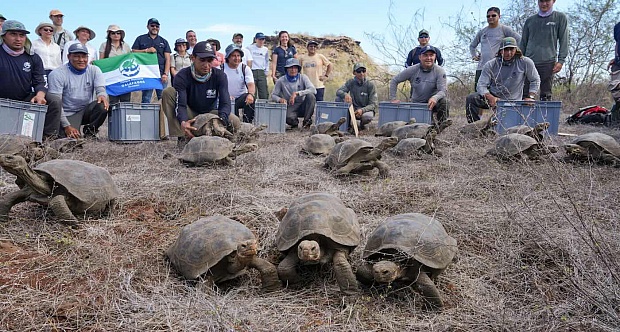
158 Giant Endangered Tortoises Released on Galápagos Island Where They’d Been Extinct for 180 Years
For the first time in 180 years, giant tortoises are walking the landscapes of Floreana Island in the Galápagos-158 juveniles released this week as part of the largest ecological restoration ever attempted in the archipelago. These animals carry the genetic legacy of a lineage believed lost to extinction, discovered through decades of research that traced their ancestry to tortoises living on a distant volcanic island, likely descendants of animals offloaded by whalers centuries ago. As keystone species that shape entire ecosystems through seed dispersal and habitat creation, their return is expected to trigger cascading effects that will support countless other native species. "Their return shows what is possible when a community leads and many partners come together with a shared purpose," says Verónica Mora, representing Floreana's 160 residents who have participated in every step of this restoration. What began as patient scientific detective work has become a testament to how extinction's grip can sometimes be loosened-not through nostalgia, but through collaboration, precision, and faith in nature's capacity to heal when given the chance.