News Story
 Environment
Reasons To Be Cheerful · 4 days ago
The Verdant Refuge of India's Sacred Groves
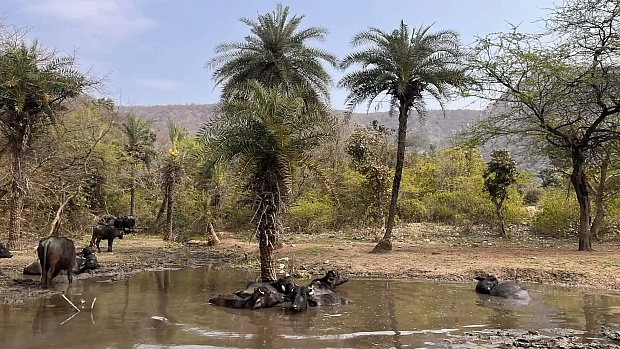
Across Rajasthan's arid landscape, ancient forests survive not through government protection but through something more enduring: the belief that cutting a tree from sacred ground brings misfortune, that a deity watches over each stream. These "devbanis" and "orans" -- community groves where "land, water, jungle and people coexist peacefully" -- have become unlikely laboratories proving that conservation rooted in local reverence can outperform state-run parks, their verdant canopies thriving while official forests suffer illegal felling. Yet as younger generations drift toward cities and real estate, the challenge isn't legal protection alone but something harder to legislate: keeping these forests relevant to people whose lives no longer depend on collecting honey or grazing livestock. When India's Supreme Court finally recognized these groves as ecological heritage in 2024, it affirmed what an 80-year-old pilgrim already knew, riding his motorcycle fifty miles just to sit beside flowing water -- that some refuges sustain us in ways no policy can quite capture.