News Story
 Youth
Youth
ourworldindata.org · 10 hours ago
Childhood Stunting Fell Dramatically Over the 20th Century - Our World in Data
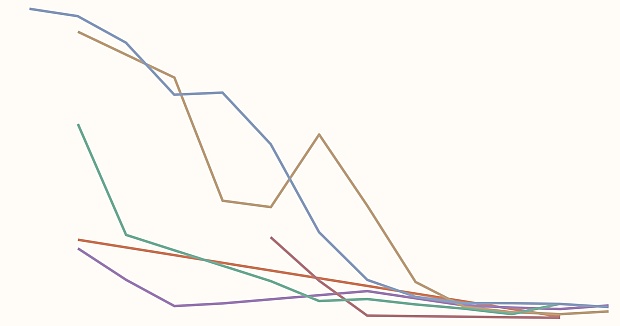
At the beginning of the 20th century, more than 70% of Japanese children were stunted-too short for their age due to malnutrition and disease-but today that figure has fallen to nearly zero, a transformation that reveals what's possible for the 150 million children still suffering from stunting worldwide. Japan's path offers a roadmap split into distinct phases: the pre-war decades, when expanding clean water access helped cut gastrointestinal deaths by 40% and accounted for much of the progress; a wartime reversal when calories plummeted and children ate "one meal a day or less"; and the post-war acceleration, when Japan tackled both disease and diet simultaneously-eliminating parasites spread through human excrement used as fertilizer, scaling up school lunch programs, and diversifying diets beyond rice to include protein and micronutrients. What Japanese public health researchers once called "the paradise of parasites" became, within a generation, a country where children could grow to their full potential. The story matters because countries like Ethiopia, Nepal, and Peru have recently achieved declines just as steep, proving that transformation doesn't require a century-it requires sustained action on disease, infrastructure, and nutrition, an investment on which hundreds of millions of childhoods depend.