News Story
 Resources
theconversation.com · 8 hours ago
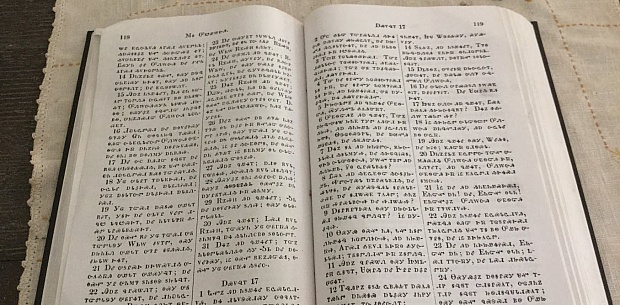
The Cherokee Bible, One of the language’s First books, Is a Window Between Worldviews
When 19th-century translators rendered the Christian Bible into Cherokee, they faced a language with no words for hypocrisy, poverty, or king - and no gendered pronouns to describe God. The choices they made reveal something unexpected: rather than bending Cherokee to fit Western theology, the translation became "a window into the Cherokee worldview," where God appears gender-neutral as "unehlanvhi," creator, and Jesus is described simply as God's "child" rather than son. Sheep became deer, watched over by deer-watchers; "mankind" became "person," reflecting a culture far more egalitarian than the one seeking to convert it. Two centuries later, as fewer than 2,000 of nearly 500,000 enrolled Cherokee speak the language as their mother tongue, this sacred text has become an unexpected lifeline - teaching not just vocabulary but the grammar of a worldview where the sacred and secular were never separate. What was meant to bridge cultures now helps preserve one, proving that translation can be an act of both encounter and resistance.