News Story
 Environment
Good News Network · 6 hours ago
70% Drop in Levels of Forever Chemicals Observed in Seabird Eggs Tracks Regulatory Success
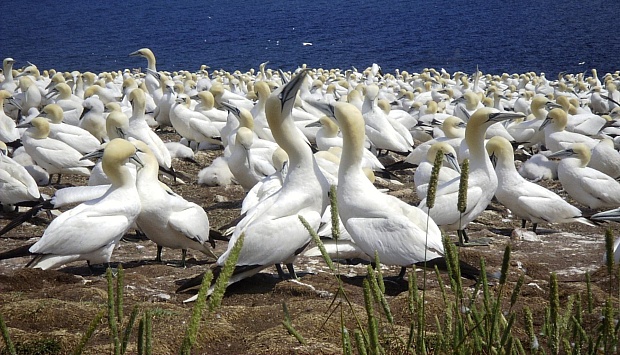
For 55 years, northern gannet eggs on a tiny island in the St. Lawrence Seaway have been quietly recording a turning point in humanity's relationship with the toxins it creates. PFAS levels -- the "forever chemicals" used in everything from nonstick pans to stain-resistant fabrics -- rose exponentially through the 1960s until regulations in the late 1990s began reversing the tide, with some chemicals now down 70% from their peak. "We see this incredible rise to a peak where concentrations seem to be higher than toxicological threshold for those birds, then it really decreases in a nice way," explains one researcher, a pattern that reveals what happens when science, advocacy, and political will finally align. The gannets, fish-eating seabirds nesting at the world's largest breeding colony for their species, absorbed what flowed through industrial rivers into fish and finally into their eggs -- an unintended archive of both our carelessness and our capacity to correct course.