News Story
 Arts
Arts
themarginalian.org · 13 hours ago
Curiosity as an Instrument of Love: Thoreau’s Touching Account of 24 Hours with a Tiny Owl – the Marginalian
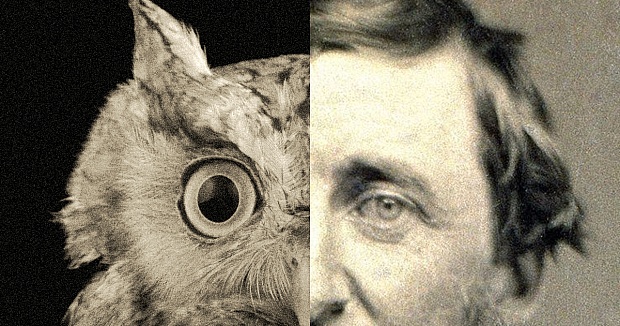
On a raw October afternoon in 1855, Henry David Thoreau encountered a small screech-owl on a hemlock stump and did something radical: rather than shoot it for study as naturalists of his day would have done, he gently captured it, brought it home to observe for twenty-four hours, then returned it to freedom. What unfolds in his journal is a meditation on curiosity as "a form of love" - the kind that seeks to understand without possessing, to witness without judgment. Thoreau records every detail of the owl's being with tender precision, from its "great glaring golden iris" to the way it peered at him "with laughable circumspection," and in the morning finds the bird so habituated to its cage that it must be shaken free. The story carries a quiet truth about our own condition: how accustomed we grow to the false comforts of our traps, and how sometimes we too need "a gentle push to feel our own wings."