News Story
 Science
Wait, Science is not in the valid categor
Science
Wait, Science is not in the valid categor
dharmalab.co · 7 hours ago
The Moment Meditation Could Change the Brain by Dr. Richard J. Davidson
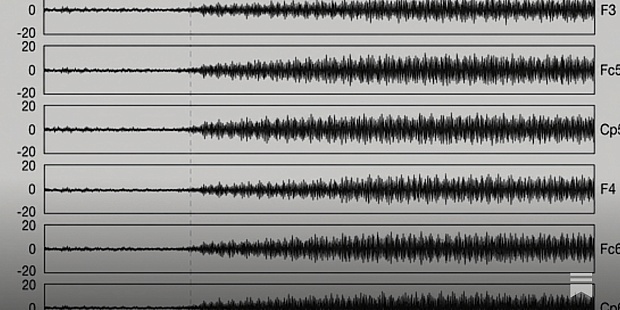
For decades, neuroscience assumed that core human capacities - attention, compassion, emotional resilience - were largely fixed by adulthood. Then, in a laboratory at the University of Wisconsin-Madison, researchers watching real-time EEG recordings from a long-term meditator saw something that stopped them cold: waves of high-frequency electrical activity so powerful and synchronized that their first instinct was to suspect equipment failure. What they were actually witnessing, as Dr. Richard Davidson and his colleagues would confirm, was a brain transformed by decades of contemplative practice - gamma oscillations that were, in their own words, "the highest reported in the literature in a nonpathological context." The 2004 paper that followed helped establish contemplative neuroscience as a legitimate field, offering the first neural evidence that qualities like compassion are not fixed traits but trainable ones. What the data quietly revealed was something practitioners had known for centuries: the mind, met with sustained attention and intention, is capable of remaking itself.