News Story
 Arts
Arts
Upworthy · 2 days ago
Clementine Hunter Picked Cotton for decades. Then She Picked up a paintbrush, and Changed American Folk Art Forever
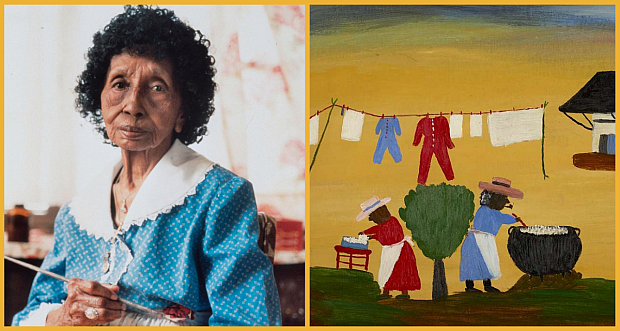
Clementine Hunter spent decades stooping over cotton rows in the Jim Crow South, her fingertips torn raw by the bolls, before a forgotten set of brushes and paint changed the course of American art. In her fifties, with no formal training and no permission from anyone, she pulled down a window shade and began painting a river baptism by kerosene light - and never stopped. "God put those pictures in my head, and I put them on canvas, like he wants me to," she said, and over the next half century she would produce thousands of vivid, flat-planed scenes of Black Southern life: the cotton fields, the church processions, the Saturday dances, the funerals rendered in colors so warm they glow. What Hunter left behind is not just a body of folk art but a visual archive of a world that was disappearing, painted entirely from memory by a woman who had never been invited to witness her own museum exhibition during public hours. There is something quietly radical in the fact that a life shaped by so much confinement became, in its second half, an act of such sovereign and joyful creation.