News Story
 Environment
kindredmedia.org · 13 hours ago
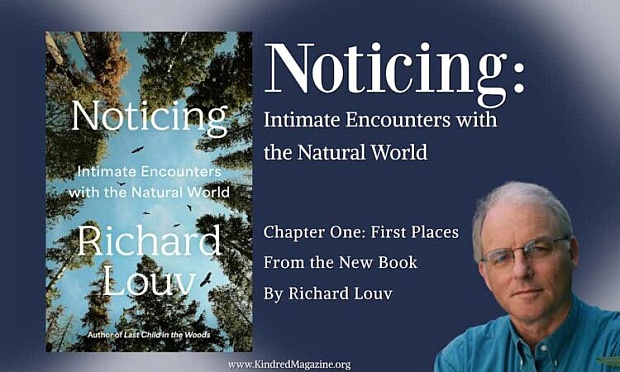
Noticing: Intimate Encounters with the Natural World – Kindred Magazine
In the opening pages of *Noticing: Intimate Encounters with the Natural World*, Richard Louv traces the geography of a life through its earliest encounters with the living world - a forbidden ravine, a marsh of lion grass, a creek where minnows and water spiders performed their "dipping and sliding dance." These weren't merely childhood backdrops; Louv calls them a "First Place," an imprinted landscape that functions as a kind of inner ark, carrying within it the textures, sounds, and silences that quietly shape who a person becomes. What the essay reveals, with unhurried honesty, is that attention itself is a form of belonging - that a child pressing an ear to tree bark to hear "those little civilizations" is doing something as profound as any act of love. When Louv finally brings a friend to the pasture he has carried inside him for years, she stands at the fence watching horses run and wind bend the grass, and says only, "I think I get it" - and he asks what, and she says, "You know." Some understanding moves only in that direction, past language, and Louv has spent a life pointing toward it.