News Story
 Arts
Arts
themarginalian.org · 5 hours ago
The Man Who Thought with His Heart: George Forster and the Birth of Sensitive Science – the Marginalian
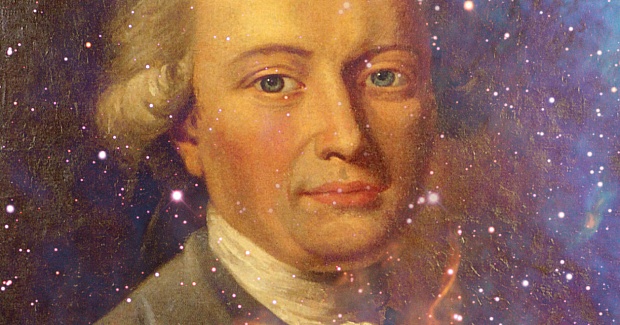
George Forster - naturalist, voyager, and one of history's most quietly radical thinkers - spent his short life refusing the era's most comfortable assumption: that reason alone could unlock the world's meaning. Writing two centuries before science would catch up to him, he insisted that "the first point from which all knowledge is gained" is *Empfindung* - sensation, feeling, the full creaturely awareness of being alive in a world that cannot be understood from a safe distance. Andrea Wulf's biography resurrects this largely forgotten man as someone who saw, aboard Cook's voyages through the South Seas, what so many of his contemporaries could not: that nature is "a magic net of countless threads joined by countless knots, where each thing is connected to all and all to each," and that our artificial divisions - between races, between mind and body, between observer and observed - were delusions born of fear, not fact. Forster's most enduring radicalism may be the simplest: his insistence, luminous and unguarded, that "love is our highest form of knowledge" - not as sentiment, but as epistemology, as the very method by which a human being opens wide enough to actually see. What his life suggests is that the capacity to feel deeply and think clearly are not opposites but collaborators, and that the truest science, like the truest humanity, begins in the willingness to be moved.