News Story
 Environment
The Better India · 9 hours ago
Bengaluru K100 Waterway: How a 500-YO Rajakaluve System Is Fighting Floods and Water Scarcity
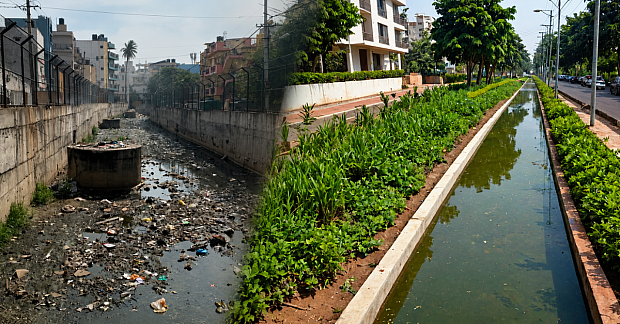
For centuries, Bengaluru's Rajakaluve network quietly solved two problems at once - storing rainwater during floods, replenishing groundwater during drought - before disappearing beneath roads and neglect. Now, a single restored stretch called the K100 is demonstrating what was lost and what remains possible: urban designer Naresh Narasimhan, who conceived the project, observed that Bengaluru "already has an extensive water network - it simply stopped functioning the way it was designed to." What began as an open drain carrying 130 million litres of untreated sewage daily has become a 12-kilometre green corridor where people walk, birds have returned, and rainwater moves through the city as it once did. The deeper story here is not one of invention but of remembering - the recognition that a 500-year-old system of canals understood something about living with water that modern infrastructure forgot. With 842 kilometres of Rajakaluves still threading through the city, Bengaluru's most durable climate solution may have been waiting in plain sight all along.