News Story
 Environment
theconversation.com · 23 hours ago
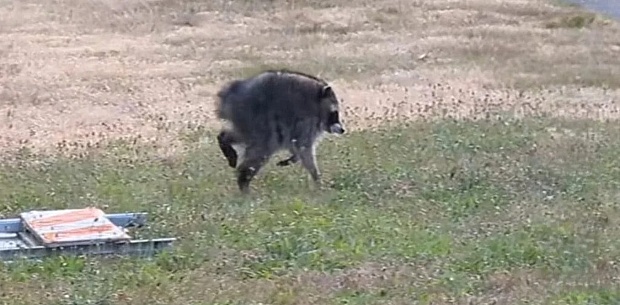
Jimothy the Raccoon Survived Against the odds, a Testament to Sophisticated Brains and Devoted Mothers
Jimothy the raccoon - compact, curved-spined, and unmistakably alive - became an unlikely internet celebrity in Seattle, but the neuroscientist studying his kind sees something deeper beneath the viral moment. Kelly Lambert, a behavioral neuroscience professor at the University of Richmond, points to the raccoon brain itself as a quiet marvel: densely packed with neurons resembling those of small primates, equipped with specialized cells tied to emotional and social processing, and wired to learn through touch in ways that echo human dexterity. Yet for Lambert, Jimothy's survival is not only a story of neurological resilience - it is equally a story of motherhood, since "Jimothy's mom celebrated his value long before his video debut and viral following," patiently modeling, catching, and nudging her disabled kit through a world that offers wild animals almost no margin for difference. What the story quietly reveals is something mammals have carried across millions of years of evolution: a brain capable of working around an imperfect body, and a mother willing to stay until that capability becomes a life.