News Story
 Technology
NPR · 9 hours ago
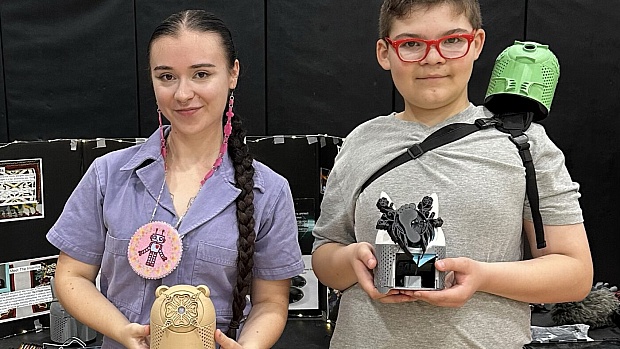
This Robot Speaks Endangered Native American Languages
When Danielle Boyer noticed that toy stores were full of robots that taught children in English but none that spoke Anishinaabemowin, she didn't mourn the gap - she built something to fill it. The SkoBot, a small shoulder-mounted robot decorated in Native florals, now teaches Indigenous children words like *makwa* (bear) and *ajijaak* (crane) in languages that U.S. boarding schools once tried to erase by force. Boyer, who started her nonprofit at 18, is deliberate about the technology: the robots play recorded audio from real speakers rather than generative AI, because "if we're not learning our language correctly, we shouldn't learn it at all." Twelve-year-old Holden Hoy, who programmed his SkoBot to introduce itself with a joke about world domination, named it Sabe - Bigfoot in Ojibwe, a figure that represents honesty - and said simply, "The language is the culture." What this story quietly insists is that the same tools capable of erasing a people's identity can, in the right hands, become instruments of return.