News Story
 Community
The Better India · 9 hours ago
Inside Madanpura’s Weaving Homes: the Women Behind Every Banarasi Saree
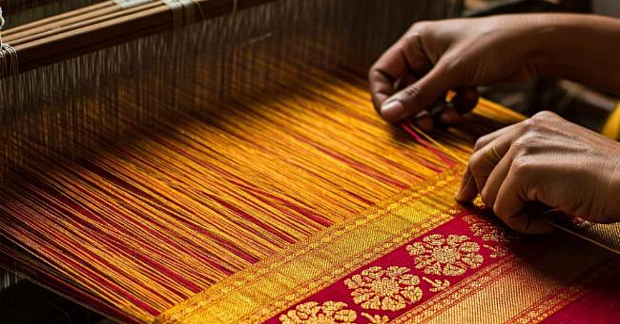
In the weaving households of Madanpura, Varanasi, women sort threads, wind bobbins, inspect fabric, and perform the delicate final work of katorna - cutting away extraneous threads so that a Banarasi saree leaves the house without flaw - yet their labor folds invisibly into a single household payment, unnamed and uncounted. Shaheen, who learned the craft from her mother-in-law and has practiced it ever since, continued working through Ramadan's long fast, saying, "The hands know what to do, even when the body is still." Her daughter-in-law Nazreen, who can distinguish silk threads by the subtlest difference in shade, once looked up the prices buyers pay for the finished sarees and arrived at a quiet reckoning: "People spend so much on a Banarasi saree - they know all about the design, the silk, the zari. But they don't know whose hands finished it." The saree carries a Geographical Indication tag that certifies its origin and tradition, but no marking travels with it to name the particular hands that made it ready. What this story surfaces is not injustice alone, but something more intimate - the way skill can be both essential and invisible, present in every thread of what the world admires, and absent from every account of its worth.