News Story
 Environment
Reasons To Be Cheerful · 8 hours ago
These Wetlands Treat the Wastewater of a Megacity
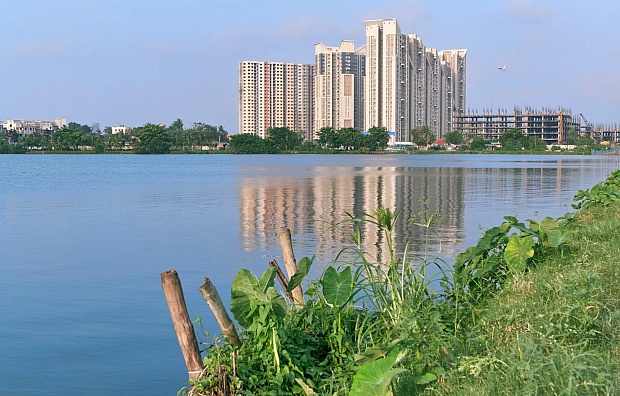
On the eastern edge of Kolkata, roughly 900 million liters of the city's wastewater flow each day into a vast mosaic of ponds, marshes, and canals - and emerge, through sun and microbes and aquatic plants, as clear water teeming with fish. The East Kolkata Wetlands have performed this quiet alchemy for over a century, sustaining more than 30,000 livelihoods while sparing the city the cost of industrial treatment infrastructure that could never match what nature does for free. Young fish farmer Sumit Mandal puts it with unassuming precision: "The bheri gives us everything - it takes the dirty water from the city and turns it into food and sustenance." What the story reveals is something both practical and humbling: that the most sophisticated solution to one of modern civilization's oldest problems was already here, worked out not by engineers but by generations of farmers who learned to work with the land's natural logic. The threat now is not ignorance but inattention - skyscrapers rising in the marsh, laws unenforced, channels silting over - and what hangs in the balance is not just an ecosystem but a reminder that human ingenuity, at its best, sometimes means knowing when to follow nature's lead.