News Story
 Environment
The Better India · 2 hours ago
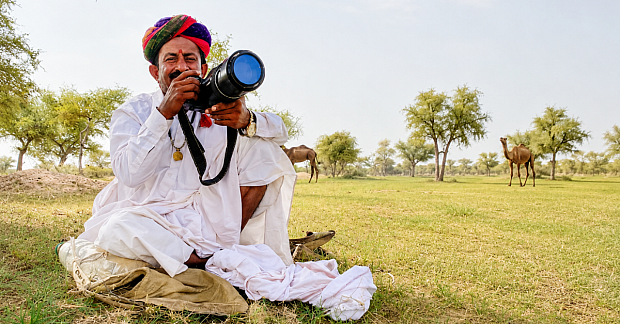
Meet Sumer Singh Bhati, the Jaisalmer Camel Herder Saving the Thar's Grasslands
Camel herder Sumer Singh Bhati grew up watching his father protect a chinkara from poachers - a moment too young to fully understand, but old enough never to forget. Decades later, when the sacred grasslands of Rajasthan's Degrai Mata Oran began disappearing into misclassified revenue records and the footprint of solar projects, that early lesson became the spine of a movement. Bhati went door to door across nearly 20 villages, then walked 700 km to Jaipur in an 85-day foot march he kept deliberately, consciously Gandhian: "Since it was a Gandhi-tarika, a Gandhian way of taking the movement forward, we chose a padyatra, a foot march, for our grasslands, our animals and our pashu dhan." His knowledge was not academic - it was the knowledge of someone who had spent a lifetime reading the land through a camel's hunger, who understood that the native Sewan and Dhaman grasses holding the Thar together were "like ghee and milk," and that when they thinned, 5,000 pastoral families, 50,000 animals, and a critically endangered bird all felt it. Now recognized among the global Rangeland Awards, Bhati's story is a quiet reminder that the people most equipped to protect a living system are often those whose survival has always depended on paying it close attention.