News Story
 Inspiration
The Better India · 4 hours ago
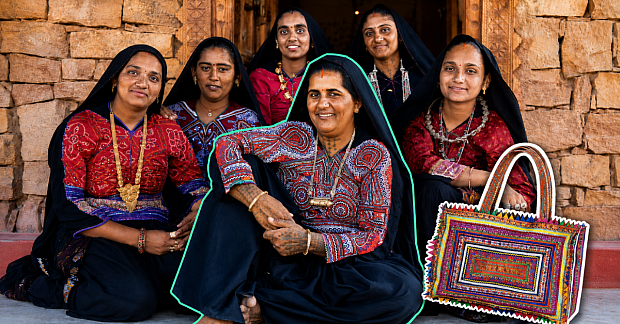
Pabiben Rabari’s ‘Pabi’ Bags Took Kutch Craft Worldwide and Empowered 300 Women
When the Dhebaria Rabari community banned traditional wedding embroidery in the 1990s, it might have quietly ended a centuries-old craft - but Pabiben Rabari saw a different possibility. Working with other women, she helped develop the Hari Jari technique, weaving ribbons and decorative trims into patterns that kept the bold visual language of Kutch embroidery alive in a faster, contemporary form. That adaptation became the Pabi Bag, and eventually Pabiben.com - an artisan-led enterprise now supporting more than 300 women who earn livelihoods from skills they already carried. As the article observes, "for a craft to survive, it sometimes has to change" - and it was precisely that willingness to let go of the original form that allowed the deeper tradition to endure. What Pabiben understood, and built her life's work around, is that preservation and transformation are not opposites: sometimes one is only possible through the other.