News Story
 Environment
themarginalian.org · 14 hours ago
Nature’s Oldest Mandolin: the Poetic Science of How Cicadas Sing – the Marginalian
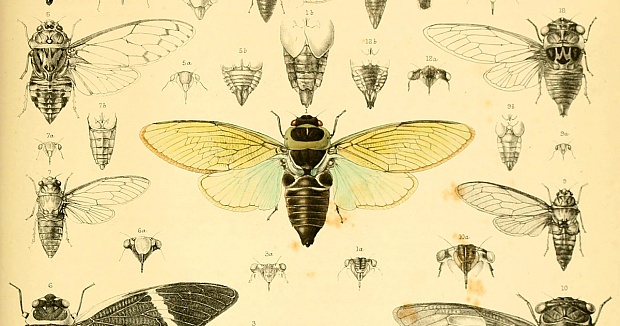
Maria Popova's essay on cicadas moves through evolutionary biology, classical poetry, and the forgotten genius of naturalist Anna Botsford Comstock to arrive at something quietly staggering: that the song filling every summer afternoon has remained unchanged for a thousand centuries. The cicada carries its music inside a hollow body - no vocal cords, no lungs - producing what Comstock described as sound "more like that of a mandolin than of a drum," a tiny instrument strummed by muscle alone, perfected long before Homer first praised it. What the science reveals, and what the essay holds open, is how meaning accumulates around a creature most people wave away as noise: billions of lives spent underground, a few weeks of singing, then silence. There is something in that arc - the long patience, the brief and total aliveness - that asks to be sat with rather than explained.