News Story
 Environment
The Better India · 4 hours ago
How Bihar’s Gandak River Communities Are Helping Save the Critically Endangered Gharial
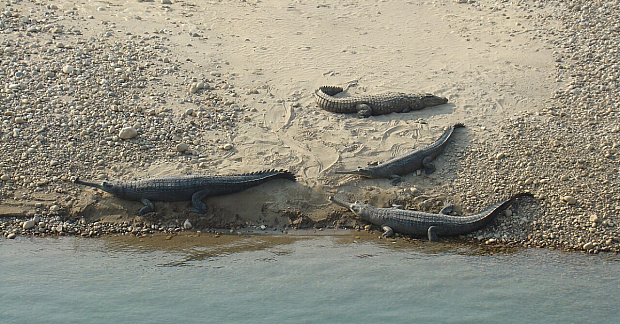
Along Bihar's Gandak River, the critically endangered gharial spent decades paying for a crime it never committed - villagers blamed it for crocodile attacks carried out by an entirely different species, and fear quietly accelerated its disappearance. The turning point came not from laboratories or government mandates, but from fishermen on boats, children corrected by their elders, and women speaking in Bhojpuri near the riverbank - one of whom spotted a female gharial in 2016, setting off a chain of discovery that located six nests and confirmed the Gandak as one of the species' last major breeding grounds on earth. "They should feel involved in the procedure because they live there," said Dr. Samir K. Sinha of the Wildlife Trust of India. "They are the best informers." What the Gandak recovery reveals is something quietly radical: that a species teetering on extinction was pulled back not primarily by science, but by a story being told differently - and by the people closest to the river choosing to become its guardians rather than its adversaries.