News Story
 Arts
Arts
themarginalian.org · 6 hours ago
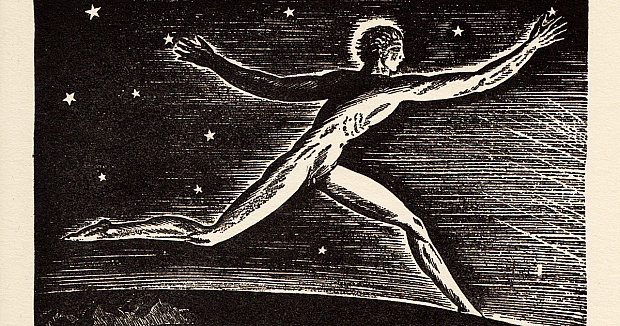
Wilderness, Solitude, and Creativity: Artist and Philosopher Rockwell Kent’s Century-Old Meditations on Art and Life During Seven Months on a...
In the final months of World War One, while the Spanish Flu was tearing through civilization, the painter and philosopher Rockwell Kent arrived on a small Alaskan island with his nine-year-old son, a trunk of books and paints, and his late father's silver flute - searching, as he put it, for "life as it should be." What Maria Popova's meditation on Kent's diary reveals is something both ancient and quietly urgent: that the self, when stripped of noise and crowding and the weight of other people's expectations, does not hollow out but fills. "These are the times in life - when nothing happens - but in quietness the soul expands," Kent wrote, and the seven months he spent on Fox Island bore this out in paintings, in his son's budding encyclopedia of imaginary beasts, in evenings of flute music and Hans Christian Andersen, in snow baths taken naked under open sky. The wilderness, Kent came to understand, is not a place but a mirror - it gives back only what the inner life brings to it, and to stand before it without fleeing is to discover the wealth already held there. What lingers is not the grandeur of the landscape but the smallness and sufficiency of what they carried into it: a broom, six lemons, Blake's poems, and each other.