News Story
 Arts
Arts
themarginalian.org · 21 hours ago
The Creative Power of Uncertainty: Polish Poet Wisława Szymborska’s Magnificent Nobel Prize Acceptance Speech – the Marginalian
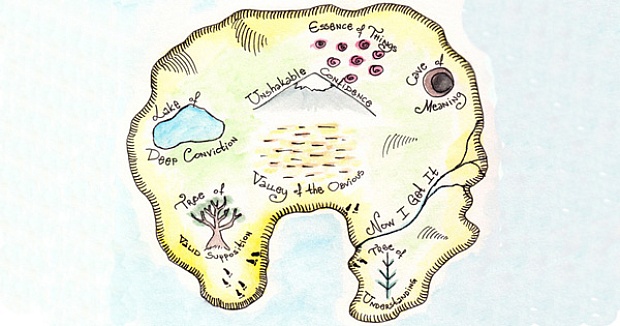
In her 1996 Nobel Prize acceptance speech, Polish poet Wisława Szymborska offered something rarer than gratitude: a quiet defense of not-knowing as the very condition that keeps a life - and a civilization - alive. Szymborska argued that inspiration belongs not only to artists but to anyone who meets their work with love and an open question, observing that "whatever inspiration is, it's born from a continuous 'I don't know.'" Against this she placed a chilling counterpoint - that tyrants and demagogues are distinguished not by cruelty alone but by certainty, by a closed fist around fixed answers that no new evidence can pry open. What Maria Popova's essay surfaces, through Szymborska's words and her 1976 poem "Utopia," is something both clarifying and unsettling: the island where everything is certain and all meaning is labeled and shelved is uninhabited, its footprints all leading back to the sea. To remain curious, to stay willingly lost at the edge of what one does not yet know, turns out to be not a weakness but an act of profound fidelity to being human.