News Story
 Community
The Better India · 17 hours ago
No-Honking Roads, Shops Without Shopkeepers: the Civic Lessons Hidden in Northeast India
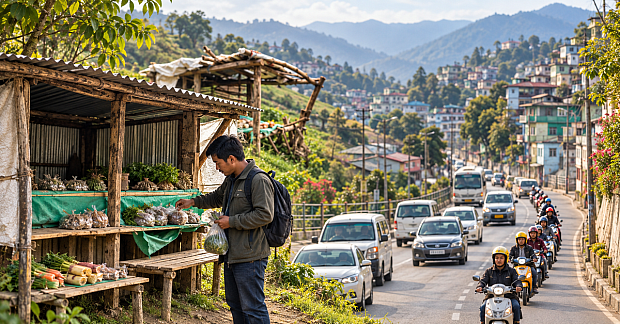
In the hill capital of Aizawl, cars queue at unmarked junctions without honking, and in Nagaland's Bade village, 83-year-old Shevotso Keyho hasn't sat behind his shop counter since 2021 - yet his vegetables keep selling and his money box keeps filling. Across several corners of northeast India, roads run quietly without traffic lights, shelves go unwatched without cameras, forests recover without wardens, and markets govern themselves without municipal bodies - systems that elsewhere depend on enforcement here depend on something older and harder to legislate. As the story observes, "some of the most durable systems are the ones nobody ever has to police." What these communities reveal isn't an absence of rules but an abundance of something rules are meant to approximate: a shared sense of responsibility so internalized it no longer needs a uniform standing behind it. The lesson from the northeast isn't that human nature is uniformly good, but that under the right cultural conditions - tended carefully, passed from hand to hand like a market stall from mother to daughter - it can be trusted to hold.