News Story
 Youth
Youth
The Better India · 55 minutes ago
He Was 14 When an Accident Left Him Paralysed — Now He’s Building Tools to Help Others Recover
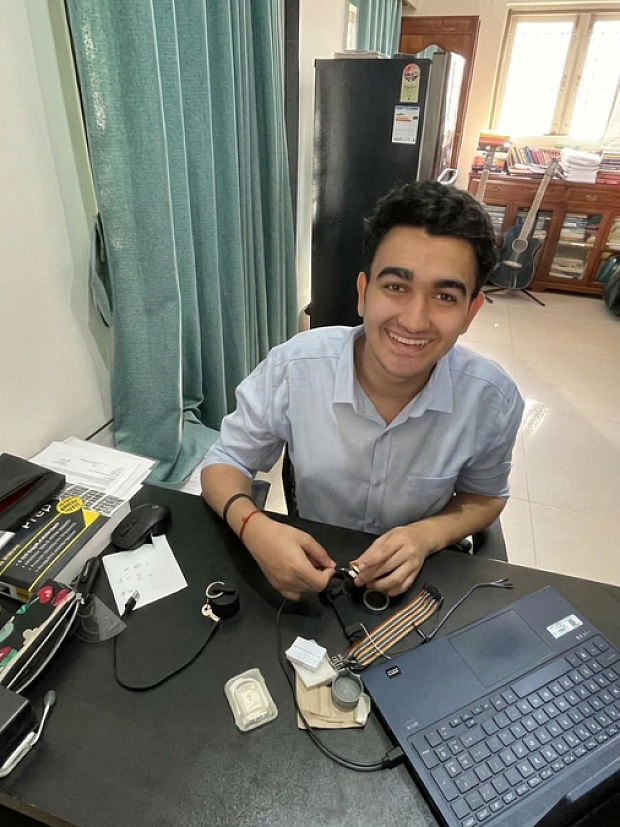
At 14, Arnav Maharshi lay in a coma, his dominant hand paralyzed, facing a recovery that was as emotionally disorienting as it was physically grueling. What set him apart wasn't his resilience alone, but his attention - he noticed that progress in rehabilitation "often depended on subjective feedback" and wanted to know exactly how much his movements were improving, not simply be told he was doing well. That precise, patient frustration became the seed of two AI-powered tools now being tested in clinical settings: an app that translates fine motor movement into measurable data, and a wristband that gently prompts the weaker hand rather than restricting the stronger one. Arnav built much of his technical knowledge through online courses, teaching himself machine learning and computer vision so his tools could work in ordinary hospitals, not just well-resourced ones. There is something quietly remarkable about a teenager who, in the depths of his own loss, turned his gaze outward and asked how the experience could be made less uncertain for someone else.