News Story
 Arts
Arts
NPR · 6 hours ago
A Look Back on the Life of London's Pearly King of Peckham
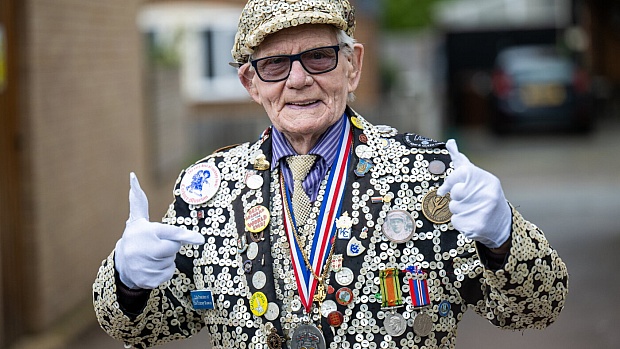
George Major - the Pearly King of Peckham, abandoned as a child, raised in a workhouse, and eventually beloved enough to fill an airport wall - spent his life adorned in mother-of-pearl buttons that transformed scrappy street hustle into something that looked almost like royalty. When NPR correspondent Lauren Frayer attended his funeral years after a baffling, barely-comprehensible 2016 interview with him, she found four generations of his family in matching pearly suits, some weeping, some laughing at her story of confusion - "A real Cockney cheeky chappy!" his daughter Janet said, pulling her into a hug. The tradition Major carried forward began in the 1870s when an orphaned street sweeper started sewing scavenged buttons onto his clothes, infusing menial work with dignity, and it persists now in the pattern his great-granddaughter traced at the graveside: a straight line for life, triangles for its ups and downs, flowers for the friends and family who help you through. What the story quietly insists upon is that culture born from hardship - coded slang, borrowed finery, raucous pub songs in a cemetery - is never merely colorful. It is how people who have very little make something that endures.