News Story
 Inspiration
dharmalab.co · 5 hours ago
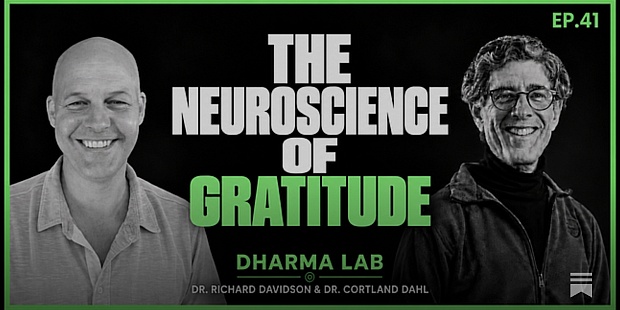
The Neuroscience of Gratitude
When 26 former students and collaborators gathered to honor neuroscientist Richie Davidson - traveling from China, Europe, and Mexico to share what his mentorship had made possible in their lives - Davidson found himself doing something he hadn't planned: bursting into tears at the podium, overwhelmed not by the praise but by "a deep sense of gratitude toward them for all they're doing and for carrying on." That moment opens a rich conversation between Davidson and contemplative scholar Cortland Dahl about what science and meditation traditions have long suspected: that gratitude is not merely a feeling that visits us, but a skill that can be deliberately cultivated. Research by psychologist Sonja Lyubomirsky shows that intentional practices - especially writing a letter of thanks - measurably improve well-being, while brain imaging points to the body itself as a kind of instrument for receiving gratitude, through a region called the insula that maps our inner sensations. Dahl traces his own turning point to a teaching from Mingyur Rinpoche, who suggested appreciating the fact that you brushed your teeth - instruction that first struck Dahl as absurdly small, until he practiced it and understood: "that is precisely the power of it, because then it is everywhere." What the episode quietly demonstrates is that gratitude, practiced with intention, doesn't just soften life at the edges - it can become the lens through which an ordinary Tuesday, a stranger waving from a stopped car, or a one-sentence email to a colleague begins to carry the same weight as a three-day celebration of a life well lived.