News Story
 Everyday Heroes
The Better India · 5 hours ago
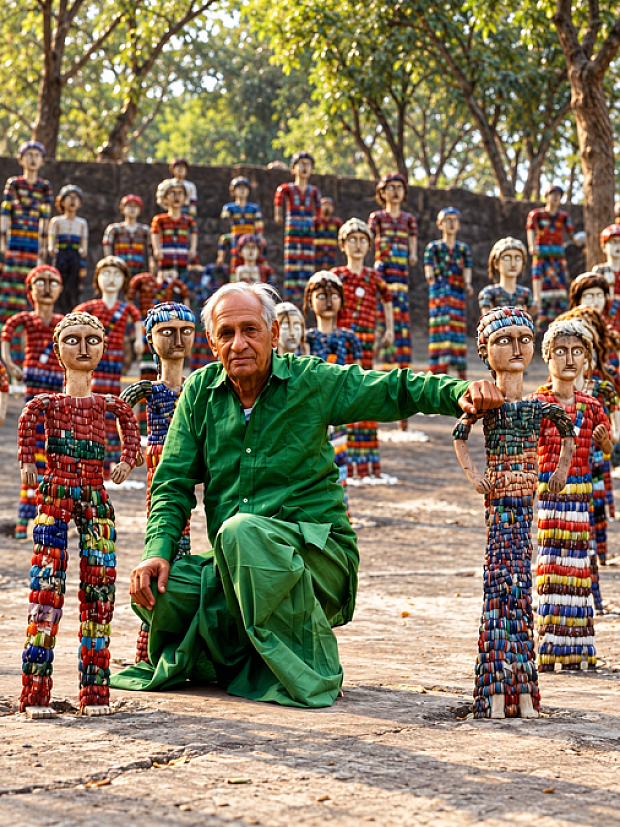
A Road Inspector Secretly Turned Chandigarh’s Broken Bangles & Construction Waste Into Its Famous Rock Garden
For nearly two decades, Nek Chand cycled through the rubble of demolished villages after his workday ended, carrying broken bangles, bicycle parts, and discarded ceramics to a secret patch of land near a lake - telling no one, not even his wife, what he was building there. A man who had himself been displaced during the Partition of 1947, he understood something about what gets left behind when a world disappears, and he refused to let those fragments go to waste. What grew from that private act of salvage was a 35-acre garden of more than 10,000 sculptures - warriors, musicians, animals, waterfalls - that officials nearly demolished before public outcry turned it into one of Chandigarh's most beloved landmarks. "I never knew who would see it," Chand said. "I just made it for my own pleasure." That confession quietly reframes everything: one of the most visited public spaces in India began not as a gift to the world, but as something far more humble - a man following his own hands into the dark, making beauty out of what others had thrown away.