News Story
 Environment
The Better India · 4 hours ago
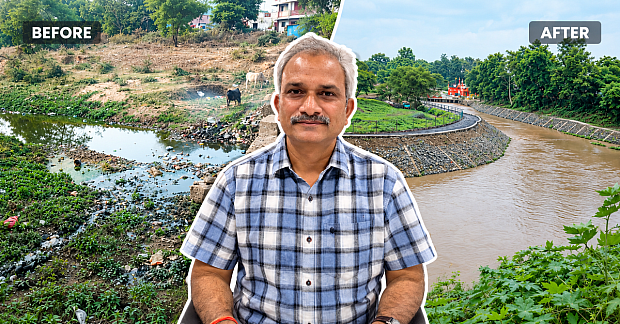
How an Ias Officer, Panchayats Revived a Dead River for 6,000+ Villagers Under Rs. 5 Crores
The Singri River had become, in the words of those who once loved it, "an open drain, thick with waste and so foul-smelling that standing near it for more than a minute was an ordeal" - a sentence that carries the quiet grief of an entire community that watched something sacred disappear and felt powerless to stop it. What brought it back was not a large budget or heavy machinery, but a civil servant who borrowed tractors, routed ₹4.8 crore through village panchayats instead of contractors, and understood that the engineering was secondary to the harder work of changing minds. IAS officer Gajendra Singh Nagesh and the sarpanches who worked alongside him treated restoration not as infrastructure but as an act of collective reclaiming - neighbors lending equipment to neighbors, craftsmen sleeping on-site, women and elders told to simply come and sit by the water, because their presence alone would protect it. When Deepdan came and a thousand lamps drifted down the Singri, sarpanch Kamlesh Malaiya crouched on the new stone steps and did what he had not done in decades: he cupped his hands and touched the river. Fish had returned to water that had known none for years, and somewhere in that moment was the story's quiet insistence - that what communities abandon together, they can also choose to restore together, if someone is willing to go first.