News Story
 Schools
theconversation.com · 12 hours ago
Students Creating Documentaries with Scientists Deepens Stem Belonging and Public Trust in Science
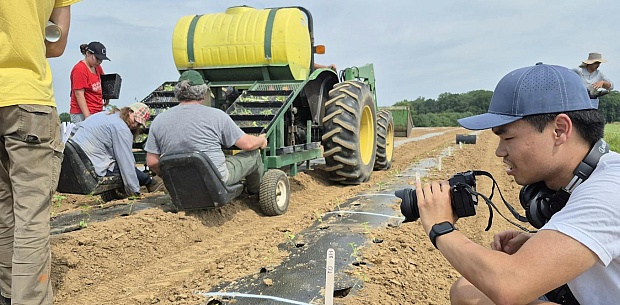
At Rutgers University, a science filmmaker and anthropologist has spent nearly two decades building something quietly radical: a program where undergraduate students co-create documentary films alongside working scientists, learning not just the facts of science but its human texture - the patience, the uncertainty, the devotion. The films are constructed entirely from the scientists' own words, without narration, so that viewers encounter researchers as they actually are - people who spend years breeding disease-resistant crops or navigating robots across Antarctic waters because they believe the work matters. After watching one such film, viewers' self-reported understanding of climate change rose from 71% to 91%, and students who once doubted they were "smart enough" began to see themselves as scientists. What the program reveals, beneath its methods and metrics, is something about how trust is built - not through authority, but through honest witness, through letting people see the "process, motivations and integrity behind science" rather than only its conclusions. In an era of eroding confidence, this lab suggests that the antidote to disconnection may be as old as storytelling itself: showing up, paying attention, and letting the truth of someone's work speak for itself.