News Story
 Community
grist.org · 13 hours ago
The Cozy Radicalism of Repair cafés | Grist
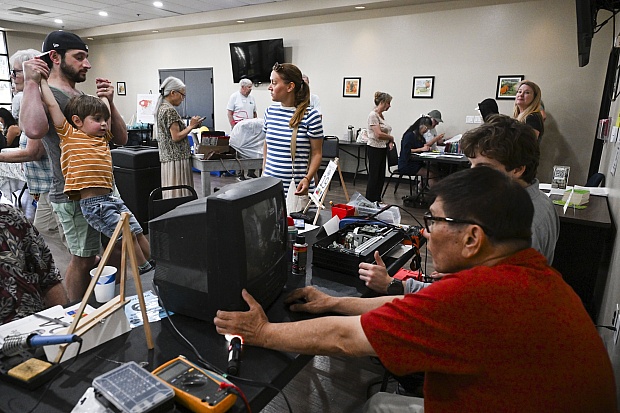
Across church basements and community halls, Americans are gathering not just to fix broken lamps and cracked chairs, but to push back against an economy that profits from loneliness and waste. When Lilly Pettus brought a dining room chair - moved across six states over thirty years, holding in its wood the weight of family laughter and hard conversations - to a repair café in Decatur, Georgia, she left with something more than a mended joint: strangers' hands had pressed her family's history back together. "When a product breaks and you have to throw it away, it's very lonely," says Martine Postma, who founded Repair Café International in 2010, and the repair cafés she helped seed around the world are a quiet argument against that loneliness. In neighborhoods where the need is economic as much as environmental, and in ones where it is sentimental, the impulse turns out to be the same - a refusal to let things, and the connections they carry, be so easily discarded. What these gatherings reveal, almost incidentally, is that the skills of care have never really disappeared; they've just been waiting for a place to gather.