News Story
 Arts
themarginalian.org · 16 hours ago
Atom, Archetype, and the Invention of Synchronicity: How Carl Jung and Wolfgang Pauli Bridged Mind and Matter – the Marginalian
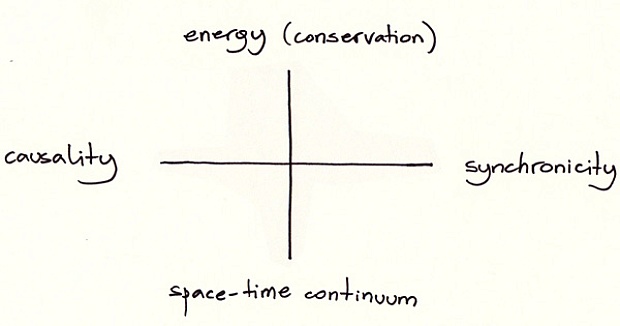
When a Nobel Prize-winning physicist and the founder of analytical psychology spent twenty-five years writing letters to each other, they were doing something that runs against every institutional instinct: they were admitting, together, that neither field alone was enough. The friendship between Wolfgang Pauli and Carl Jung - physicist and psychiatrist, each regarded as esoteric by his own peers - grew into one of the twentieth century's most quietly radical intellectual partnerships, yielding the concept of synchronicity and a shared conviction that the boundary between mind and matter may be more porous than science had dared to say. Jung, writing to Pauli in 1953, captured the particular courage their collaboration required: "If you feel isolated from your contemporaries when grappling with the unconscious, it is also the same with me, in fact more so, since I am actually standing in the isolated area, striving somehow to bridge the gap that separates me from the others." What endures in their correspondence is not just the daring of the ideas but the portrait of two exceptional minds choosing intellectual humility over the safety of their respective disciplines - finding, in each other's company, the freedom to ask questions larger than either could hold alone.