News Story
 Environment
Good Good Good · 20 hours ago
Indigenous Women Plant Hundreds of Thousands of Trees to Restore Water Sources
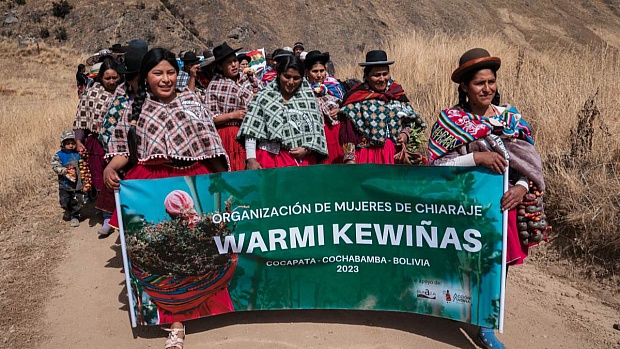
High in Bolivia's Tunari mountains, where only 10% of the original Kewiña forest remains, Indigenous Quechua women are doing something that defies the usual logic of conservation: they are replanting not just a forest, but the conditions that make their own lives possible. The Warmi Kewiñas - "Kewiña Women" in Quechua - have grown nearly 500,000 seedlings of a slow-growing native tree that harvests fog from the air and channels it into the soil, quietly replenishing aquifers that supply water to an entire metropolitan region. What began as an environmental initiative revealed a deeper need, and so literacy classes were woven in alongside the saplings, because as project director Rosmery Ayala understood, genuine stewardship requires people who can read the world for themselves. "Now we women can read, write, and sign our names - we've all learned through the Kewiña project," said Andrea Vicente, the group's president, who tends both the nursery and a vision that reaches far beyond her own lifetime. "When my children are grown, I want these forests to be fully grown, too" - a sentence that holds, in quiet equal measure, a mother's love and a community's bet on the future.