

October 11, 2024
The following conversation took place in the Nancy & Steve Hauk Gallery as part of a joint project of Celadon Arts* and the Pacific Grove Library’s public art program. The exhibit, “Texture, Proof of Presence,” featured the work of Ruth Bolduan, Heidi McGurrin, Jackie Canterbury and Lydia Nakashima Degarrod. Los Angeles art writer Patrick Frank, whose essay is featured in the exhibit catalog, spoke at the exhibit’s opening, Oct. 4, 2024. The following Friday afternoon an interview was conducted in the library’s main lecture space.
Christine Crozier: Hello everyone. Richard Whitaker is the editor and publisher of works & conversations magazine, and is going to be interviewing artists Ruth Bolduan and Heidi McGurrin in what’s bound to be a riveting conversation. I should remind you that our programs are sponsored by the Whitney Latham-Lechich Trust Foundation.
Richard Whittaker: Thank you, Chistine. There are a few empty seats here in front. [people move] Tonight, with the help of Ruth and Heidi, I hope we can get at least some of the hidden things we artists are up to into the open. I say “hidden” not because we’re trying to keep secrets. It’s because art is one of those avenues through which sometimes we touch the deeper places that are usually covered over in us – places that exist in all of us. But artists, traditionally, have had the calling of trying to bring this material out of hiding so it can be shared - these matters of the heart. And I think this is richly relevant in both Ruth’s and Heidi’s art making.
I got to meet the artists last week with Gail [Enns] and fell in love with both of them—along with Jackie and Lydia—who can’t be here tonight. [Turning to Ruth and Heidi] So, to begin I’d like to ask each of you to say something about the roots of your art journeys, and how things started in whatever ways you’d like to tell it. Would you start it off, Ruth?
Ruth Bolduan: Sure. I’ll start by saying that earlier today, my sister and I drove to Big Sur. I’ve been going to Big Sur for quite a long time, and of course, coming to Monterey as well. I realized that, as many people do, it’s a place of tremendous presence and power. In particular, China Cove at Big Sur. When I first saw and painted it 15 or 20 years ago, it seemed to me to be a very important place on the face of the planet. I’ve traveled a lot—it’s something I share with Heidi—and traveling and seeing different places influences my work. So, one thing you’ll see in my paintings is that they gravitate toward places in the world that exude some sort of presence, or power. So that sense of the spiritual comes through my understanding of the power of the place. One of my paintings in this show, for example, is based on a watercolor I did in Cornwall in England, which is one of those places for me. And most of these places have to do with water.
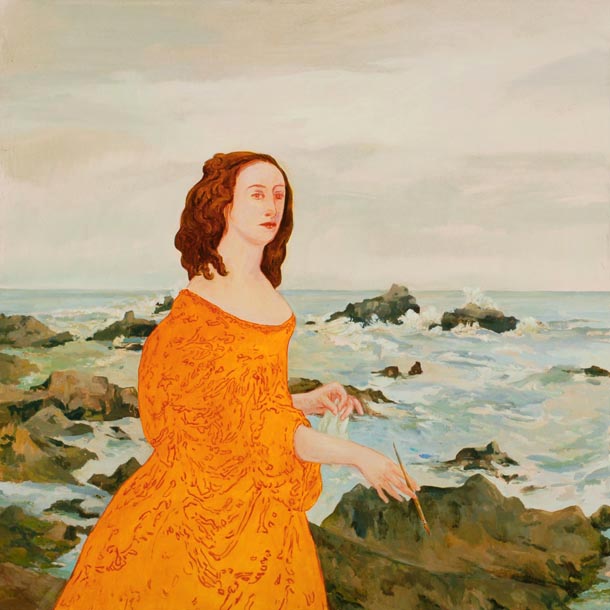
By the Sea, oil on canvas, 30" x 30"
The other thing in my work that’s been present for a long time is the idea of sacred geometry— that there can be this power in geometric forms themselves in the way they’re generated. I’ve been painting all my life, which is getting to be a little longer all the time. And those are probably the two motivating factors in my work.
Heidi McGurrin: When I was very young, my mother built me a really beautiful art studio in the upper garden that I used to disappear into all the time. But my mother also, if she didn’t like my paintings, she’d collect them and put them down by the garbage can. I had three nannies—a black nanny and two Japanese nannies—and one of the Japanese nannies took all my thrown-out-paintings home and completely peppered her walls with them. It just made me cry because my mother didn’t want me to continue the family tradition of painters, writers, archeologists—all these interesting people. She was very proud of the ones who were very successful, but the one I really loved was Lolly at the Nepenthe in Big Sur.
When I was young, I went to school in Virginia. There was a wonderful art department, and I used to paint. I loved horses. And a wonderful thing about that school was their gorgeous steeplechases and the horses jumping over rock walls. Virginia was very beautiful.
I ended up in New York City, and I was still painting and drawing. Then I came to San Francisco and went to the Art Institute. I absolutely loved the Art Institute! There were amazing art teachers there, and I loved it.
Shortly after that I decided I needed to get away from home, because I was being corralled into a certain type of life. I was front page headlines. I broke a lot of rules, apparently. So I ended up going to Big Sur to visit my aunt. I stayed in Big Sur for a while, and painted a lot. And there were so many artists that knew my aunt - and she introduced me. I lived down at Anderson Canyon near Esalen, looking out over the ocean. And I had a big window that would open up to the sea air. And I painted in my garden.
My cousin had lived there before, and he was a wonderful painter. It was magical. And suddenly I felt there was a beautiful life I’d only imagined. It had opened up. I lived at various places on the coast, and I painted. I always was painting.
And I always was writing, because I could write my pain out in all the things that were bothering me and let them move on. But I never showed my writing until about 2017.
During that time, I’d already been to South America a number of times. I’ve been all over Mexico with the Flying Doctors. I’d go to help people, and bring eyeglasses. With dentists, I’d be the translator, and the scout for the villages. We’d go way up in Sonora and way down in Baja, California to remote places. That’s probably my most favorite thing I’ve ever done.
Then I lived in Chile for quite a while. I lived near Pablo Neruda. I visited him and their house. Being in his home was so magical. They had all these paintings and sculptures. They had a round room that was like a library overlooking the ocean. It was just beautiful—very crude, and beautiful. Outside they had a big corroded bell. It was old and huge, like a big Spanish church bell. He’d go out there and ring it, and ring it—like through the wind.
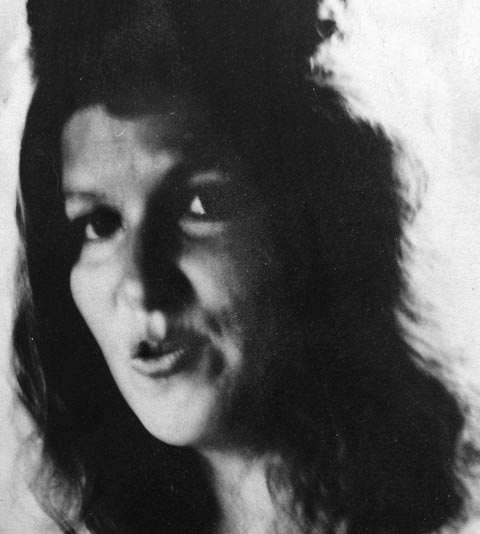
It was just magical, and I never fell out of that mood. And my writing became much more… I mean, I’ve been writing forever. Now it’s thousands of poems. I started to sort through and find different places they belong. I feel like my paintings and poetry are very alike. I like to be able to taste things. I like to be able to taste my paintings, too.
I have three shows right now—a big show of paintings on Pierce Street in the McCone Building in Monterey. 23 paintings. And I’m really proud of it. Eduardo came in and said, “I want all of them.” It’s at MIIS—the Middlebury Institute of International Studies.
Richard: Gosh. What you’ve shared is inspiring, and overwhelming. We’d like to hear more about all of it. And getting back to you, Ruth, first of all, I wanted to ask you about the word, “Chinoiserie.” First of all, do you accept that word being attached to your work?
Ruth: Absolutely.
Richard: I would love it if you’d explain what that means to you, and how you use it, and why it appeals to you. I’m also extremely interested in the fact that you had openly used the word spiritual about your work. You’re a professor emerita. Am I right?
Ruth: Yes.
Richard: See, there’s this gap in the world about art. Non-schooled people often think about art as spiritual and being about beauty. Then there’s the academic world. “We don’t do beauty.” And, “We don’t get into spiritual matters.” There are sophisticated and didactic things that are rather difficult for regular people to understand in the art world under the influence of the post-modern critique, and so on. So, I’m intrigued that you’ve used a word that most artists I meet would never dare to speak. So can you say something about all that?
Ruth: In a word, yes, I can. I mean, it’s true. I was a professor. I graduated from being a professor three years ago. I’m a professor emerita of painting for Virginia Commonwealth University in Richmond. I’ve run into that all my life as an academic; people don’t want to talk about spiritual issues, and they don’t want to talk, even about beauty.
I think beauty has finally become somewhat acceptable in the academic kind of lexicon. But still, people don’t trust it. I love it. That’s very important to me. The spiritual side of it doesn’t come from necessarily going to church, or something. It really comes from a profound sense of a kind of spirituality that arises out of a place. When I’d be in Europe, for example, walking around Cornwall, I had the feeling I was walking in a place where people had walked for hundreds, and hundreds, and hundreds of years. That in itself gave me a profound sense of, not just humanism, but really a sense of the spiritual. So, I seek that out wherever I am, and communicating something of that becomes very important to me in my work.
As to Chinoiserie, which is such a nice French word. Right? I spent a lot of time in Paris. I had a six-month residency out there, which did lead to some of the paintings you see here—particularly looking at 18th century beautiful dresses that the women wore. But a lot of those dresses were made with silk. In the 18th century, silk was brought from China. So already, the French and Europeans had this sense that the beautiful things they wanted were coming from China.
I’ve also spent time in China. I had a six-month residency at Tsinghua University in Beijing. I had a wonderful one-person show there, and they made me a lovely catalog. It also made me understand a little about the incredible concepts of beauty that go through the whole of Chinese culture. So that really influenced me. The idea of Chinese-ness or Chinoiserie, is something that applies to the decorative arts. But it also applies to kind of a philosophy of beauty that I espouse. And it’s part of that.
For example, one of the paintings here is of a horse in the mountains. I call it Horse Looking at Mountains. But he’s standing and the mountains are behind him. So actually, I think he’s listening to the mountains. If you look at a horse’s ears, well they’re amazing.
I also spent time in Qatar, and I got to know the Emir’s Arabian horses quite well. I’d go and listen to them in their paddocks, and talk to them. So there’s that sense of the animal looking and listening. But they’re also sort of little Chinese water illustrations around there. So, the listening, the water, Chinoiserie—to me, it all hangs together somehow.
Richard: So interesting. I wanted to ask both of you about horses, because you both have a connection with horses. And my friend, Jane Rosen, a wonderful artist, has a deep connection with horses. So, I’d love to hear more from both of you about horses and how that experience is for you.
Ruth: Heidi, would you like to start?
Heidi: I love horses, and I feel like the horses love me. They calm me down. I feel safe around them. I feel completely happy. Content. They’re also different. I was in the middle of an evacuation, which I’ve been thinking about again, because there’s been another fire, and I found a place for 20 horses to go. In the past, there was a major evacuation—there were about 1800 animals, all different kinds—and it was the most beautiful thing to see the people that love the horses come together and find help.
Horses are just amazing, and I don’t know what else to say. I’ve written poems about them, and I visit them a lot. I feel much more whole and content inside myself if I have their breath on me. And with dogs. I’m really good with animals. I feel like they’ve been my best friends all my life and I trust them, where I often don’t feel that comfortable with people.
Ruth: Horses. When I was young, I did ride horses a little, and I always admired them. When I was about 10, my mother took me to a drawing course, and I was very good at drawing the back end of horses because they go like this, and they go like that. It’s very simple to draw the back of a horse. But I could never draw the front legs. They’re much stranger. So, I always drew horses with a bush in front when I was little. I finally got over that after many years of looking at horses and began to get what the front legs were doing.
And through the university, I ended up teaching for two years in Qatar. The Emir of Qatar is phenomenally wealthy and has Al Shaqab, his Arab stud. They gave me permission to wander through their gated paddocks, so I would just go in. I have a little drawing made of a day-old foal. I’d sketch the horses and talk to them, and the horses would listen. Horses are very, very good listeners, you know. That’s a really nice thing about a horse. It really listens to you. They act like they care somehow—even to what you’re saying. So yes, it goes back.
I also had a show in Greece, in Athens, when I was younger, and I began to look at all those wonderful old Greek paintings on vases of horses. Boy, the Greeks could do horses in any pose, and I began to copy those. I don’t have a whole answer as to what it is about horses, but I think it does relate to that spiritual power a horse has. Actual, real horses have that somehow. They retain that.
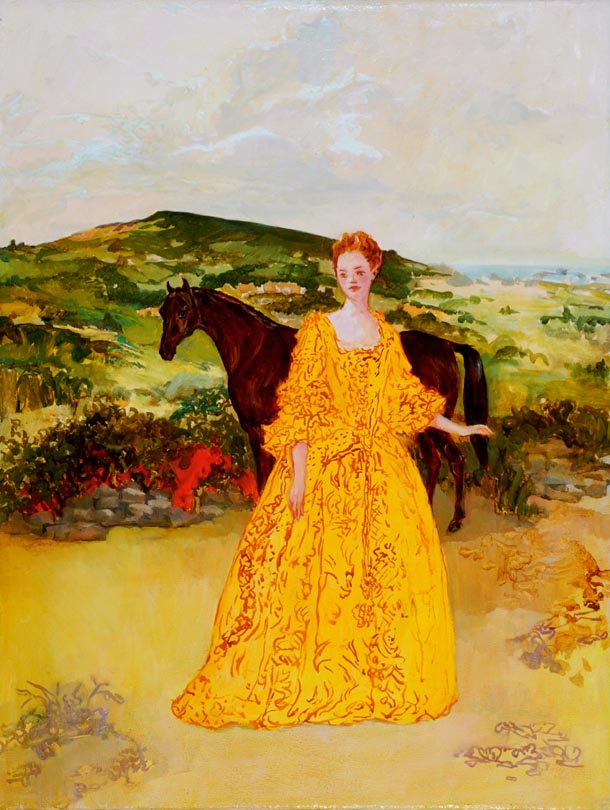
Landscape w/ Red Bush, 2008, oil on canvas, 22" x 17.5"
And I’ll put a plug in right now. Tomorrow I’m doing a workshop from nine to eleven. It’s called Drawing a Horse Without a Horse, and actually it will probably get much more interesting than if we just had a horse there. Anyway, those are some of my thoughts about horses.
Richard: It’s very interesting, the sensitivity you both mention. I have a friend, John Malloy, who works with at-risk youth, and he always takes them to horses. He says the horses are miracle workers. With these kids who are having a hard time, difficult lives, they get near a horse and suddenly they just have a friend. Everything opens up. Of course dogs and animals, in fact, probably all of life is sensitive—even us people, although we don’t know it that much. In way, maybe that’s why artists are potentially very valuable in having, perhaps more of a relationship with this subtle energy.
So Heidi, would you talk about your poetry a little? How it began? How do you find the right words? What are your thoughts about language? What are your experiences with your poems?
Heidi: Well, I just write like a river. It either comes or it doesn’t. You never know when it’s going to come, but it comes like a painting comes. It’s the same thing. Suddenly I’m compelled. I have to do that. It’s like grabbing colors and I never know exactly where I’m going. I don’t have something fixed in my mind. It’s just a mood. It's energy that I have to get out. Something is talking to me. I write until I can’t write anymore. I need a lot of air around me. I can’t have any people around me. I want to be alone, and I need that.
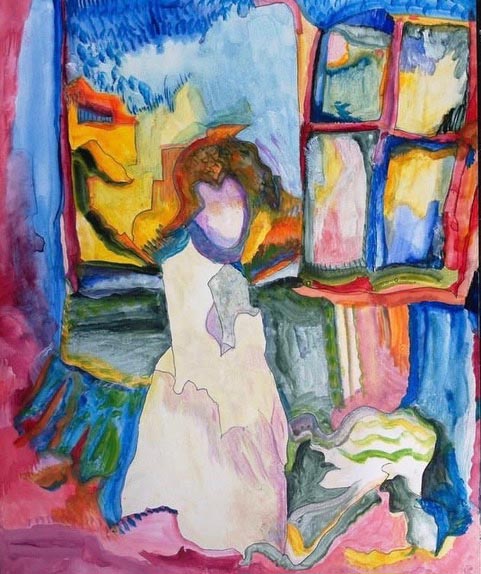
I can be with animals. I go up where the horses are and set up everything, and I paint. I like the sounds of the water, and the horses drinking water—and the rain on the roof. All of that is just magic. I need to be where the magic is, and I need to be where the people who have the magic are. That’s what’s interesting to me.
I’ve been to all kinds of ceremonies in really far out places and countries… northern Brazil. I’ve been in Cuba. I mean, people take me to certain places to meet certain people and all kinds of things happen for me—cards are read, seashells are thrown and read. I’m interested in all of that—and the people that are in that kind of community.
My Aunt Lolly really influenced my life. I preferred her as my mother. They were complete opposites. My mother had another agenda for me, but Lolly—with her I could eat what I wanted. She taught me how to knit, and encouraged me with my art. She gave me a huge camera and told me “Go build your house.”
I bought land down there, knowing that I might need to escape, and I did. I had three kids at that point, and I built a house. I lived next door to the Jardines, who had the most beautiful Arabian horses. It was a beautiful situation and it was right next to me. So I had those horses there as a part of my life.
Big Sur was magical. There are a couple of things that are important to me about this area, and I usually write about them in my poems. I taught all the way from Pajaro down to King City during the floods. I went and found kids—19 kids. Grandmothers were making us food. I was given the back of a restaurant. It was pouring down rain. I’d had all these beautiful kids and my art supplies because I’d been an art teacher for a long time. After school, we did paintings and poetry with children. It was in Spanish a lot. Thank goodness for my Spanish, because it made a really rich life for me.
I taught in all the elementary schools—thousands of kids, really. I encouraged them to go wild. I didn’t want them to hold on and be tight. And the paintings were beautiful.
In another class there, I had a 94-year-old man. There were people all the way from kids, teenagers, to much older people—all Spanish. I wanted them to paint their lives and their history. Because they’re not happy here. They’re happy knowing each other and being close, and come from a world that’s so amazing—and here they are, stuck with everything. I feel for them. So I like to bring out who they really are. Their artwork is just completely amazing.
And murals. I like to do big murals, big public art. I’ve got permanent murals in county health departments. I like the art to be in the place where it counts, where it’s seen and appreciated. I love the people I meet through what I love doing.
Ruth: One thing I want to say about your work Heidi—which I really love—is that when I read your poems, I get a tremendous sense of looking. You’re looking. And all these beautiful words you come up with—it’s really the power of sight itself. I just find that really beautiful in your work.
I think I mentioned something about the spiritual in general. But in particular, I’ve always been interested in the idea of sacred geometry, even with my students. There’s a shape in there that could be like—it could be a vagina, it could be a boat, it could be the halo on the back of a saint in a Greek Byzantine painting. It’s all those things. But, essentially, it comes from the idea that with geometry itself, you can build forms—powerful forms. So that thing you see in the piece with the two people looking, this kind of weird shape? That shape is a matrix. It’s the intersection of the circumference of a circle with the radius of another circle—the shape that’s cut out between those two things. It can be used to make triangles, rectangles, pentagrams, hexagrams and octagons. They all grow out of that initial matrix of the intersection of those two circles.
So that fascinates me. And even though it’s not always evident in my work, it’s very important for me to have that sense of this underlying geometry. That’s motivated the West in art—and also the East—in different ways. I’m very interested in the relationship between the East and the West in painting and in art.
Richard: Some people feel that there are objective realities that can be represented mathematically, and by sacred geometry—like the Golden Mean, for instance. What do you think—I mean, in our sophisticated, scientific materialist culture today? Of course, when he was still Prince Charles, King Charles founded a whole school in England around traditional, sacred arts – like sacred geometry. And music is quite precise in its frequencies. [Yes] So I wonder if you have about any thoughts around all that.
Ruth: Well, you bring up music, which certainly plays on our deepest emotions, as does visual art. Whether you’re talking about a scale in music that has certain vibrations and certain intervals of measurement—that’s a kind of a geometry—but it’s also a powerful emotion we feel. Even if we don’t know what the geometry is, we sense it in music.
I think the same thing happens in art. You have an example of a rectangular painting. If it follows the proportions of the Golden section, there’s something powerful in it that. Even somebody who doesn’t know anything about that will sense the structure. And whether it’s in art, painting or drawing—or whether it’s in music—the geometry actually resonates in our bodies, even if we’re not aware of it. I like the word “resonance.” There’s a kind of a resonance there among all of those structured art forms, even if we don’t understand the structure. We still sense that there’s something there. So that’s what I think about that.
Richard: That is interesting. We all know the difference between a major chord and a minor chord, for instance. It’s just a difference in vibrations, but we immediately are given a distinctly different feeling.
Ruth: Right.
Richard: This is an intriguing topic in itself, but I wanted to ask you about your time in Germany and more to the point, your reflections on German culture, German philosophy, and how it influenced you, if at all.
Ruth: The short answer is I know who Kant was and who Hegel was, but if you ask me to go much further than that, I’m not up on it. I spent six years from the age of 12 to 18 living with my family in Germany. And when I was an undergraduate student, I had an art history class. I wanted to write something about a couple of Rembrandt drawings—"Hagar in the Desert," I think was one of them. So, I went to the Library of Congress and, because I read German and French, and English of course, I got out books in French, English, and German on the subject of Rembrandt. The English books were all very cut and dried, talking about the forms and the ways they were drawn. Then I read the German book and it was radically different. It was talking about the spirituality of the work, about religious thoughts. So I think that’s something.
There’s a kind of a spirituality there, and I guess it’s connected with the German philosophers as well, like Nietzsche. When I was a girl I read Also Sprach Zarathustra in German. It sounded so wonderful and I thought, “Oh, my God! This is an incredible book. Nietzsche is an amazing person!” Then a few years later I read it in English, and it was so stupid. So there are these huge differences, and they extend into philosophy and everywhere else.
Richard: That’s intriguing, and I wish we had time to dig into that. Heidi, I wonder if you’d share something about your experience with different languages. And maybe it’s a good time for a poem.
Heidi: I’m not wearing my dark glasses to read like I did last time [laughs].
Wolfhounds, and Precious Things to Me
Pablo’s home Isla Negra next to the sea
sings of treasures I remember.
Outside I sat I listened as he rang his ancient bell high on the cliff
singing to the wanderers the ring of the wild.
My life is a stairway each step filled with memories
of the known and unknown
snuggling my nose against the velvety softness of the horse’s nose
rubbing his furry ears my fingers open
as the apple pieces disappear quickly.
That is my delight.
The wolfhounds greeting me pushing their heads against my chest
looking into me like there’s no tomorrow.
A handmade then almost transparent smooth porcelain cup
My grandmother’s almost celadon green feel of her long wide white jade necklace
The songs of the doves the wild birds and the blue jays
who bravely fly back and forth through my kitchen window
amuse and delight me, my special trips to the store
for just peanuts bird food and a treat for Tin-Tin
My surprise at the colors that show up in my brews
When the eucalyptus tree leaves turn the strands of creamy wool
into a heavenly yellow
or a lime treasure of unknown viridian green for me.
The magic of cochineal beetles create a magenta
that warms a part of me never warmed before.
An unexpected kindness
the whalebone that welcomes me on my front step
The roses that bloom suddenly for their own reason
The poisonous flowers that flute and twist and perfume
for their own reasons
Horses nuzzle
Children cuddle against their mother’s breasts
and trees blow in the wind
There I feel safe
[applause]
Ruth: That’s beautiful.
Richard: It’s really beautiful. Art. There was a show at the Oakland Museum years ago. It was called What is Art For? I thought it was a gutsy thing for a sophisticated artist like William Wiley and the Oakland Museum to address that question straight on. What do you think art is for?
Ruth: Pleasure, first of all; lots of pleasure. Secondly, I’ve always painted to find things out that I can’t find out any other way. I wouldn’t call it research, though. Picasso said painting isn’t what you seek, it’s what you know. So, unlike many academic people who think painting is like research, I don’t think it is. I think painting is what you know. And what you know is what you paint. So, I guess that is what art is for me.
Richard: That’s nice. What do you think art is for, Heidi?
Heidi: Well it just it’s a hunger. I think it’s a hunger. And it’s just part of my life. And I know what I like and I know what I don’t like.
Richard: Yes. That’s good stuff. [To someone in the audience] You have a question?
Audience: Could you tell us about your experiences here painting? Your experiences here at Pacific Grove?
Ruth: Well, like I said earlier, there’s something about places of power that draw me, and this whole Monterey Bay area is one of those places, I think. So I’ve come here over the years and painted. Years ago I had a show at the Museum of History of Monterey, and I went out and did lots of little paintings of the bay, and of Big Sur—little, plein air paintings. Then I made larger paintings based on those.
And just today I realized I’m wanting to go out and paint here again. I mean, it’s just so incredibly beautiful. So that’s part of it. It’s just the sheer beauty of the place that has motivated me for a long, long time.
Richard: Ruth, do you have anything more to say about Chinoiserie? We had a conversation last week at the opening. I had this curious idea some years ago, reading Chinese titles like the “Joy Luck Club,” “Sincere Home Décor,” “Plum Blossom Gate.” It seems like there’s a cultural tendency in naming, to focus on uplifting things, beautiful things, and I brought this up with you. Do you remember that? [yes] And then it was interesting what you shared with me from your experience with Chinese students.
Ruth: Oh, yeah. As I said, I did have a residency at Tsinghua University in Beijing, which is actually one of the two top universities in China. So the students I had were at a very high level. I mean, it’s ridiculously competitive for these students to even get accepted to a university at that level. Yet, at the same time, those are some of the gentlest, nicest, politest people I’d ever want to meet. They’d gone through incredible competition to get to that place, but when I had them in a class, I can’t say they were exactly charming, but they were just good-willing and loving.
I experienced somewhat the same thing actually, with my Arab students in Qatar. That’s not to put down American students, but you know, there’s something in China that just brought out a sense of good-willingness, of loving even, that felt very warm and kind of amazing to me in an academic situation. You don’t quite get that in an American university in the same way.
Richard: I remember that. And I’m curious if you could say anything more about those elegant dresses, and the expressions on the women’s faces? I feel sure you must put care and intention into all of that. So maybe you could say something about one or two of your paintings.
Ruth: Yes. One thing about the expressions… I’ll say something that’s almost an anathema: I don’t think of myself as a feminist, and I never have. Everybody else thinks of me that way, but personally I don’t. Having said that, nevertheless I embrace all interpretations of my work.
One thrill of being a painter is when people find things inthe work that I didn't know were there. So good, you reminded me of what I painted. That’s a great idea. [laughs] I’ve done paintings about looking. And what do I do as an artist? I look. I think a lot of these shows, women - like the woman on the front cover - is a woman in an 18th century dress, and it’s a golden yellow, which is a color I love; a very powerful color. She’s holding a paintbrush in one hand, and she’s holding a painting rag in the other hand.
Over the years, I’ve done a lot of paintings of women who are painters, and of course, some people say they’re all me, and there’s something to that. Every woman I paint is kind of me; it’s not somebody else. She’s standing in front of the bay with rocks and she’s looking at the viewer. That sense of looking is a very important part of who these people are. Even as I said with the horse with the mountains - "he’s looking at mountains" - the act of looking itself is something that comes across a lot.
Is there any other painting you’re thinking of?
Richard: How about Desdemona?
Ruth: That’s the last painting I painted and doesn’t actually have anything to do Shakespear’s Desdemona. She just came in and her name popped up. And she’s not really Verdi’s Desdemona. That’s all. She died, didn’t she?
Richard: She was murdered, I think, in Shakespeare’s play Othello.
Ruth: Yes, murdered. So this Desdemona is more of an apparition emerging out of a kind of a weird grid, which could be seen almost like a jail, almost a form of the mind. It’s almost kind of a mental construct she has, and she’s emerging out of that. Originally, she was in a much larger dress, and then I just smashed that piece of yellow down it, and all of a sudden she became vaporous, which I liked a lot better than just a fully formed person. There are these frilly things around her, so it’s kind of a sense of becoming, but she can’t quite get there because she’s on this boat in the middle of this yellowness. There’s kind of a shadow behind her and these two Buddha-like figures behind her.
I love the word “liminal,” and they’re kind of in liminal spaces or ephemeral spaces or spaces that aren’t fully realized - just as maybe these figures aren’t. This one, it’s called Landscape With a Red Bush. So there’s just this tiny red bush in it, right there, but I sort of decided that was the key to the painting, even though it was just very small that red bush. The fun thing is that that background is actually based on a watercolor that I did in Cornwall. So, I brought that into the painting so it brings that kind of strange, watery, quality to it.
So anyway, the only other one I’d mention that’s kind of interesting is the one with the tureen, which is a little bizarre, because there’s that silver tureen, right, and then there’s a hunt scene behind it. I was commissioned a few years back by the Virginia Museum to do a six-and-a-half by ten-foot painting, with tons of objects from their collection of British silver. So that was my attempt to see if I could do it. Then I thought, well, I can’t just have this picture of a tureen, it needs something else.
The Virginia Museum also has an incredible collection from Mister Mellon of horse paintings, hunt paintings, so I put a hunt painting behind it. In the Virginia Museum, if you ever go there to Richmond, which is where it is, they have a huge collection. They have great horse paintings from the 18th century, and hunt paintings all over the place. Mr. Mellon said, “I’ll build you this museum if you promise always to show my horse paintings and never, never not show them.”
For the first three years I was in Richmond, I would walk by that whole collection and I was like, ‘Oh, my goodness. Look at that. It’s so stupid! All these little paintings of horses. Then one day I went in, and I was hooked. That’s been my favorite room in the museum ever since. So these are some horse paintings from the museum.
Richard: That’s great.
Heidi: Can I read another poem?
Richard: Oh, yes, please.
Ruth: That would be wonderful.
Heidi: This poem is in our new catalog. It’s called "Bal Masque Nepenthe"
It was something the other night,
with all the wild costumes and bands, too.
Walls of ambies coming off the grill,
but not anywhere near like the Willy burgers
of the good times of older days.
A small fire pit in the fire I noticed—not like I remember the mosaic was a stage
and suddenly dancers were dancing in the firelight.
Deep blue starry bright sky, remembering the phoenix bird.
The peacock preening against the roof corner.
Children twirling amidst mysterious figures, painted faces,
feathers and masks. Crackling fire sparks, noting their presence.
Memories floating from friends rediscovered
some long forgotten.
The air crisp, clear, fresh, chilly.
Sparkling glasses passed behind the bar
to revelers sitting close on bar stools, whose stories
lay deep in their secrets of time gone by.
Tales of the life of the mountains the sea
the land of the runaway children.
[Applause]
Richard: Doesn’t it make such a difference to hear the artist read?
I mean, it’s wonderful. Could we get you to read another one?
Heidi: "Runaway Bride?"
Ruth: I know that one, because the painting in there is titled Runaway Bride.
Heidi: Okay. (This was real for me.) … "Runaway Bride."
Woken too early by a strange high-pitched sound
bubbling out of her nearby phone, unfamiliar.
She remembered she carried her beaded white dress over her arm
her fiancé behind her, a bouquet of fragrant roses,
wrapped ribbons in his hands.
The mood of contentment passed her by
as she held her camera quietly by her side.
The curtains seemed heavy with dust
as she felt her eyes wandering the room.
Soot from the fireplace had darkened the walls.
None of her business, she told herself,
but a lift and attention needed to shake the old slumber
of the room warm and echoing so many weddings of the past.
New time new energy a fresh lift.
Mood, trial and errors.
She remembered tiny pearl beads bouncing down the hallway
behind the long train of satin and lace.
A softness felt of tears choked
as she struggled with the weight of the dress and her imagination.
What she felt and those feelings she held deep inside
unable to express.
She was covered and held together in tightness
her stockings filmed over her long legs.
Their softness making her forget for moments
what he had said to her in a harsh way not long before.
Carrying her emotions her promise,
her forgetfulness, her innocence, inexperience, lack of preparation,
her mother’s lack of knowing.
Only his black tie and shiny shoes with the initials on them,
shining so that mirrors would not reflect more than the ruby brilliance
of their polished toes.
She forgot and felt a snag in her gut.
Who was this guy?
Was it the bowtie or the grin?
The polished, slicked back hair
the cufflinks barely visible showing wrists of desk work,
not hammers shovels work tools of progress
just a pen and a voice ordering others around.
Those shoes with the shiny toes gave him away.
Silk butterflies flew around her brain
in a strange uncomfortable
way as she struggled in her long cumbersome dress
down the aisle of forever
and toward a cliff she knew nothing about.
Her mind was beginning to race.
A stern voice from somewhere was pushing her.
It seemed to have hands and sharp nails
which poked her as she slowed down
starting to dread suddenly what
was laying ahead.
Her father said nothing.
He always seemed so silent
with something of concern to her appeared.
Where was he now?
Her mother had dreamt the whole thing up.
The women conniving together
the arranged marriage so they thought.
Expenses were heavy nothing left to the imagination.
Gifts piled high on the smooth, brilliant cloths of sensibility.
She struggled as her feet swept carefully
in those tight high satin heels that killed her.
She thought, not now.
The voices started to wiggle and squirm
in her head as each foot stepped carefully to the notes of music
that suddenly became like a dirge of another choosing.
Her arms felt limp with watery nerves.
Her head started to swim in thoughts
that confused her movements.
She saw her grandmother her softness her kindness
Remembered her grandfather laying quietly
in the back room near the kitchen.
Her eyes suddenly opened and she started to spin.
Dragging suddenly her long flowing off-white satin gown
with the train of tears behind her
she began to run.
She ran faster in the opposite direction, faster and faster
She was a free spirit and reminded herself how fearful
she was of a strong male voice lifted at her
trying to control her thoughts.
How she shuddered and shook deep inside
when the beast came out in him.
She had already been through this before
and could not accept this ever again.
Don’t try to control me her mind screamed at her.
She ran faster, catching her dress on something unseen.
She ran and ran, shredding the dress
caught by a blind hope
shredding the beauty to ribbons.
Her stockings with tiny blue threads sewed
into white creamy tops of delicate smooth sheerness
exposing her nakedness.
Her flowers in her forgotten bouquet dropped one by one.
The pink ones first, then a flood lily of the valley
and forget-me-nots
creating a river of petals
in the wake of her movements
as she vanished into the back of the church
out the heavy, dark open door
that seemed miles high.
Free again…
[Applause]
Ruth: You know, when I first read that poem, I’d already painted the painting in there called Runaway Bride, but it wasn’t called that before I read your poem. It had a different title. It was called something like Rococo Veil - duh. Then I read your poem and realized that that was what my painting was about. So I mean, this is just wonderful!
I think this can happen, you know, sometimes between an artist, a poet, and a painter - that they really influence each other, and your poem really influenced that painting.
So I have a question. In your poem, you said something about “attention needed.” Do you remember that part?
Heidi: Of this poem?
Ruth: Yeah, because it really resonated with me. There’s some famous - maybe it’s Samuel Beckett - who said, attention must be paid. And they said it over and over again in this book. I just thought somehow you said this wonderful thing about “attention needed,” and I really liked that. See, that’s like asking a painter, “What was that little yellow thing that you put down there? Why did you do that?”
Richard: But you know, it’s interesting, because it’s something that came to you and the issue of attention itself is actually a very interesting question.
Heidi: Attention? That might take me a minute.
Ruth: It’s okay. I don’t need to know, but it just struck me that attention was needed. It’s like, this is a horrible moment, this runaway bride. Attention, I wish I remembered what book this was. It said “attention must be paid.” [ a hand goes up in audience] Did you find it?
Marie: Yes. It’s in Death of a Salesman.
Ruth: Right, of course. Marie has a Master’s degree in English, among other things.
Heidi: Here it is: “Soot from the fireplace had darkened the walls. None of her business, she told herself. But a lift - and attention needed, to shake the old slumber of a room warm and echoing so many weddings of the past.”
Ruth: Wow. It’s really beautiful. Attention must be paid.
Richard: [to audience] For anybody who’s willing to speak - what do you think art is for? It’s a big question. And let’s pass the mic around.
Audience: I think art is about giving permission to express oneself with color, drawing, photography, charcoal - and just about anything else that he or she chooses to make art with. But I think the real point is that, when one does art, one should able to just express and not be corrected… to know that he or she can’t make a mistake because in art, there are no mistakes.
Ruth: I always tell the kids that.
Same speaker: As Bob Ross once said, “No mistakes. Just happy accidents.”
Ruth: Bravo.
Heidi: I always tell the kids that they’re on the stage. Don’t go back, don’t correct, don’t erase.
Audience: I think art is to evoke a feeling in those who are witness to it. I used to teach kindergarten in New York and we were so lucky to have a course offered by Lincoln Center in the appreciation of aesthetics. So there were all different aspects of art, and after this course, I could sit in a doctor’s office and look at a print on the wall, and appreciate what it made me feel - whether it was a positive feeling or a negative feeling. So, I learned to appreciate all styles, and all types, by that exposure I was so fortunate to have.
Richard: Thank you for that.
Audience: And I think you have to have art in order for that to happen, because we only have our own two eyes to look at the world, and interpret the world through our own experiences and feelings. So, art takes us into the experiences and feelings and thoughts and spirituality of others - and have that emotional experience about it, and incorporate it into our own experience.
Audience: I’m not an artist, but I’ve been surrounded by them. When mom was having Alzheimer’s I would take her to do a watercolor class here. They used to try and get her to draw inside the lines. It was so funny. Then, when they just let it go, she was like, my mom… [emotion] I’m sorry. … They called her their “Picasso” because she did these beautiful drawings freely. She was an abstract painter and they didn’t know it.
Ruth: But you know, that’s an interesting thing because artists who have Alzheimer’s… William de Kooning, a very famous American artist, had Alzheimer’s for probably ten years before he died. But he made these wonderful paintings. He couldn’t put two thoughts together, but he could still take a brush in his hand and make marks with colors and lines. He did that until he died, even when he really didn’t know where he was or even who he was. He still knew he was an artist. And that’s a beautiful thing.
Audience same speaker: Right. When they tried to get her to draw a rose, it didn’t work. But when they just let her do her thing, there were these beautiful watercolors.
Ruth: Yes. She had her own inner sense. That’s a beautiful story, and really a truthful one.
Richard: Okay. I think we can conclude this wonderful conversation. Thank you everybody for showing up for this. Thank you Ruth. Thank you Heidi. Thank you, Gail. Thank you Christine. It’s wonderful you’re having these art events here at the library in Pacific Grove. ∆
* Gail Enns, formerly the founder of Anton Gallery in Washington DC now directs Celadon Arts which aims to build community relationships and awareness through contemporary art. "We host privately funded exhibitions, help emerging artist build an audience and create education programs. By forming alliances with contemporary artists we hope to become a catalyst for business and community leaders." Celadon Arts is a 501c3 arts management organization established in 1989.


Reflections
Be the first to share your reflection on this interview.