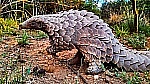
Inside a car boot in Johannesburg, a three-month-old pangolin pup lay curled in a cardboard box, a cabbage leaf beside him — the trafficker's well-meaning but useless gesture toward feeding an animal whose diet consists entirely of ants and termites. That detail somehow says everything about the vast distance between the illegal wildlife trade and the natural world it plunders. Named Stevie, after the police officer whose sting operation saved him, the pup spent six months in the careful hands of veterinarian Kelsey Skinner — bottle-fed cat milk formula, walked daily through natural habitat where she'd flip rocks to expose ant eggs, slowly coaxed back toward wildness. Pangolins are the world's most trafficked wild mammal, their scales ground into traditional medicine, their meat sold as delicacy, yet they are so poorly understood that the first rescuer to encounter one in 2008 simply had to "release it back into a safe habitat and hope for the best." What's been built since then — the expertise, the facilities, the networks — is a quiet, painstaking science of return. Stevie was eventually released into the Manyoni Private Game Reserve, fitted with telemetry trackers, and left to find his own way. The trackers now show him regularly visiting females in their burrows. "It's pretty guaranteed," says Skinner, "that he is now a father to a few pangolin pups." A cabbage leaf in a cardboard box to fatherhood in the Zululand bush — the distance traveled in that arc is remarkable.