News Story
 Environment
sciencefriday.com · 3 hours ago
The Miniforest Movement Gains Ground in the U.S.
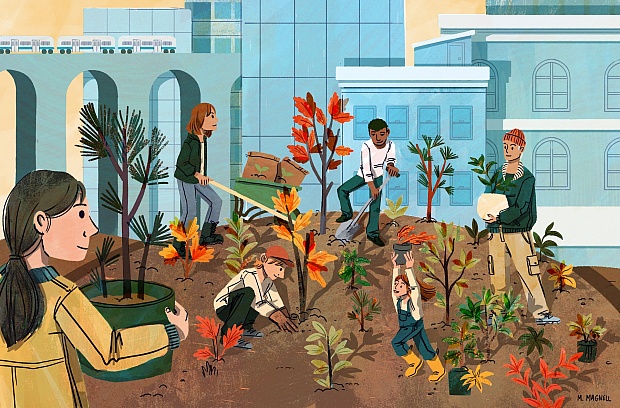
A 50-year-old Japanese planting method is quietly reshaping vacant lots, schoolyards, and parking strips across the United States - not through large-scale industrial effort, but through the hands of neighbors who show up on a Saturday to tuck seedlings into carefully prepared soil. Developed by botanist Akira Miyawaki, the method skips the slow prologue of natural forest succession, mixing climax species and their supporting plants to create self-sustaining ecosystems within decades rather than centuries. What makes it remarkable is not just the science but the ritual embedded in it: "He would take each plant, and the community had to say its name," recalls one organizer - "it was about restoring relationships between humans and non-humans." The miniforest movement asks something modest of each participant and returns something harder to name: a sense of belonging to a place, and a stake in its future. As one botanist puts it of planting days, watching children work alongside parents and strangers find common purpose, "it's just such a high."