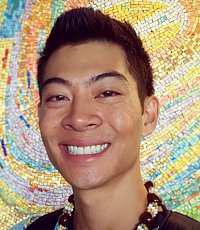
When I was an elementary school boy, I used to walk into my uncle's little candy shop in Honolulu and feel something I didn't yet have words for. I'd get my candies and snacks from Uncle Clay, and as I grew older, my eyes could start seeing more of what was actually happening in that small space. People entered as they were, and they felt loved. That's it. That was the whole secret. And somewhere along the way, a question took root in me that would shape the rest of my life: how come this isn't happening everywhere?
Why Can't Every Day Be Like Christmas?
Uncle Clay likes to tell a story from when he was four or five years old. On Christmas Day, he asked his mother — my grandmother — a question: Why can't every day be like this? He had seen people simply loving each other, being joyful, and his childlike wonder couldn't accept that it should be reserved for one day a year. He never stopped carrying that question. He dreamed of owning the neighborhood candy shop, made it real, and then held on through fourteen years of struggle to keep those doors open — letting go of the world, in a sense, to serve a spiritual calling.
My father shaped me from the other side. He earned ten college degrees by the age of thirty-eight — which happens to be my age now. He ran forty-nine and a half marathons; he took a wrong turn on one and finished only a half, and he wanted fifty, so I kind of completed that last one for him. He just turned eighty, and he paints for hours every day — thousands of paintings in the last few years alone. He calls himself an art machine. Watching him, I absorbed a lesson about the sheer power of human will — to set your mind to something, go after it, and break the barriers of what you think is the end of the race, only to find another starting line.
He named me Bronson, after Charles Bronson, the tough-guy Western actor. He wanted me to be tough. I always felt like, hmm — I don't think I'm the kind of person who kicks people out of town for looking at me wrong. But I've come to understand it differently: being tough for the right things. My father gave me the strength of will; Uncle Clay showed me where to point it — not toward growing our accolades, but toward using our gifts to serve the greater good. That marriage of ambition and values became my life's work.
When the Dream Says No
I learned early that dreams can be taken from you without warning. As a young man I suffered a spontaneous collapsed lung — the kind of thing nobody expects when you're the fit son of a marathoner. And just weeks later, I attempted an audacious moonshot: trying to walk on to the USC football team. That dream ended. Years later, another dream — one I'd worked on for over a decade and announced to the world — would end too.
How do you process that? For me, it starts with being honest about the disappointment — feeling the pain of a dream you thought was meant to be realized. I journal. I express my feelings. I cry. And when I share what I've written in community, I start to gain perspective on the other doors that might be opening precisely because this one closed. You have to grieve the loss. But over time, you get better at moving through it more gracefully — with less self-judgment, less shame of failure.
"The more repetitions you go through in life, that becomes who you are. You see adversity and you say: what's the story behind this that can be written? That is actually even more than I can imagine — because this was presented in my life, and I had an opportunity to respond, and go beyond what I thought this was really about."
The House That Love Built
When I followed my calling to be an entrepreneur, I went back to that candy shop. Fifteen, sixteen years ago, social entrepreneurship was on the rise, and I wrote a business plan for how we could take Uncle Clay's shop and grow it into something like a Starbucks of shave ice — but with a radically different center. As a graduating senior at USC's business school, I gave the student baccalaureate speech announcing that we were going to build a venture around spreading love. Pure Aloha. That became Uncle Clay's House of Pure Aloha.
The dream was never really about shave ice. It was this: could we create a place where we serve people from the spirit of love — where the exchange isn't just giving and taking, but mutual benefit, serving and loving each other in community? The closest I ever felt to that dream coming together was our pay-it-forward shave ice experiment, seeded during time I spent in India learning about the gift economy. Just like Uncle Clay's childhood question: why isn't every day like Christmas? Why can't every place feel like this?
We ran the House for well over a decade. There were beautiful years and very hard ones. And last year, we closed the doors one final time.
Falling Into Humility
This is where the real story lives — not in what we built, but in what the building and the losing did within me. It's a very dangerous game when we build our identities on the outcomes of our efforts instead of grounding them in who we truly are as human beings. So much of the suffering in both of those chapters — the football field and the House — was rooted in ego. I am someone who tries out for the top football team. I am an entrepreneur with a vision.
"The ego always likes to puff itself up. When it wins, it feels good. When it loses, it's devastated. But every time I've fallen, it's led me toward greater humility. And that humility has led me to finding my true identity — which is unshakable in the face of the wins and losses of life."
If there's any sadness about the last chapter closing, it's that the dream hasn't yet fulfilled its potential impact on the world. But I have such gratitude for going through it, because of what it's done within me — my own self-discovery and spiritual growth. Even something as dear as a vision you've carried for fifteen years can be stripped away, and still your heart can be full. You can have peace. You can have hope for the future. The dream itself is still very much alive in me. The question I'm holding now is: what is being asked to be born out of this closure — so that something even more profound, true to that same original vision, can happen?
Becoming the House
My spiritual path has wound through many landscapes. In high school, I went to my Catholic parents and said I wanted to learn more about God, and they sent me through confirmation. Around the same time, I met the Buddha through Hermann Hesse's Siddhartha, fell in love, and began meditating in the Zen tradition in college. Then India opened up to me — Swami Vivekananda, Gandhi, the richness of those mother traditions — and I found my way to Eknath Easwaran's passage meditation, dyeing the mind in the great texts: the Prayer of Saint Francis, verses from the Dhammapada. To this day, I carry tremendous curiosity about what I can learn from any tradition.
And at the same time, I could not escape where I was being pointed. When I asked, honestly, what came through — the answer was a return to my roots: surrendering to Christ, and finding my identity in Him. Right before this conversation, I was reflecting on where I am in life right now, and I realized I'm moving from being a seeker and searcher to being one who is surrendering. Not grasping so much for where is the path, but simply trusting that the path is unfolding, and that I have guidance in it.
There are many passages in the Bible about building your house on solid rock. I keep a verse from Matthew — from the Sermon on the Mount — on my fish tank, my little creative outlet. And what it all continues to point to is that this house is really the inner temple. It's us. The big shift for me has been asking: what does it mean to first become the house — so that from that way of being, our actions and our thoughts then translate into creating the world? For years I tried to build a House of Pure Aloha out in the world. Now I understand the deeper assignment: every house can be a house of pure aloha, and it begins with this one.
These days I practice simply. I'm on day thirty-three of a forty-day devotional on Brother Lawrence's The Practice of the Presence of God — bringing God to mind moment to moment, in the mundane and the mystical, five or ten minutes of conscious time each day. My word for this year is hypomonē — Greek for endurance, from Romans 5: rejoicing in our sufferings, because suffering builds endurance, endurance produces character, and character produces hope that does not disappoint.
The Dojo of Fatherhood
I'm so grateful to be a father. Bodhi is four years old; Hugo just turned four months. My wife Katie went back to work this week, so I'm actually coming off the most challenging week of fatherhood in four years. And what I can happily report is: I've never been more joyful.
Fatherhood has been the arena of my greatest spiritual growth. If you've raised a toddler, you know — it's learning to truly keep loving when you're kicked in the face, poked in the eye, and told some very not-nice things, and realizing it's all part of a human growing. How am I going to respond in this moment from love? And then again, after the fourth or fifth time, when you thought you'd already gotten there? There's no pause button for kids. The responsibility is always there.
I hold a real tension between serving my immediate family and serving the world family. We live in such a challenging time — polarization, a warming planet, the question of stewarding AI wisely — and I feel compelled to be part of all of it. And at the same time, the most important work right now might be responding in love to my toddler punching me in the face. The only way I've reconciled it is this:
"It doesn't matter who I'm with, who I'm serving, at what scale — whether it's one person or humanity at large. It's who I am, who I'm being, and being as fully present as I can to that moment. And then the next moment, and the next moment. When you bring that perspective, the house becomes the dojo. Your kids become your greatest teachers."
Standing Up for Joy
People have told me over the years that vulnerability is one of my gifts — speaking from the heart, telling my life as it is. But it took me a long time to share openly about my faith journey, because carrying faith in these times can create so much separation. It becomes a label — Christian, Buddhist, Muslim — that gets in the way of connection, and that's the last thing I want from living out my faith. What's given me courage is setting a simple intention: if I ever share my story, let it be from the place of asking how does this serve others?
Since I started sharing honestly, there's been a domino of affirmations — unexpected meetings, doors opening, moments that feel like divine appointments. I've learned that discernment is a muscle: the mind does its due diligence with the facts, the heart takes the question into meditation and prayer, and the biggest decisions sometimes need a year of sitting. And sometimes there is no right answer until you make the decision, take the path, and let life give you more information because you decided to go.
After this devotional completes, my next one is about living with joy. That word feels so important to me right now: no matter the circumstances, the ups or the downs, if joy is the posture in which we experience life, there is so much sweetness in living from that place. It's difficult — that's where the training comes in, to truly stand up for joy.
Uncle Clay asked his mother why every day couldn't be like Christmas. I spent a decade trying to answer him with a shave ice shop. Now I understand that the answer was never going to be a building. It's a way of being, renewed moment to moment — in a kitchen, in a hard conversation, in a 4 a.m. feeding. The doors of the House closed, but the dream didn't. Maybe it's just waiting, as all dreams are, for each of us to first become the house.
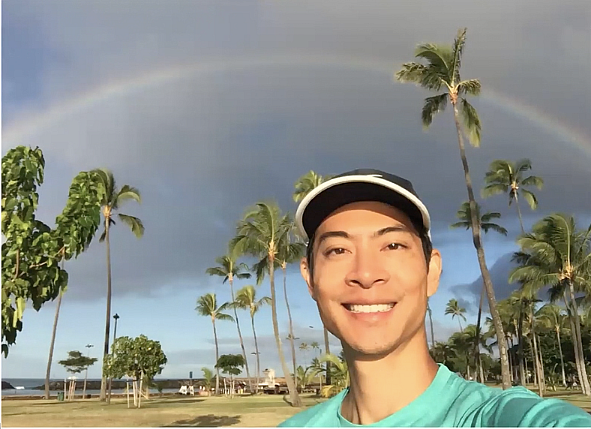 serial entrepreneur, writer, and family man with an expansive heart,
COMMUNITY REFLECTIONS
SHARE YOUR REFLECTION
1 PAST RESPONSES