
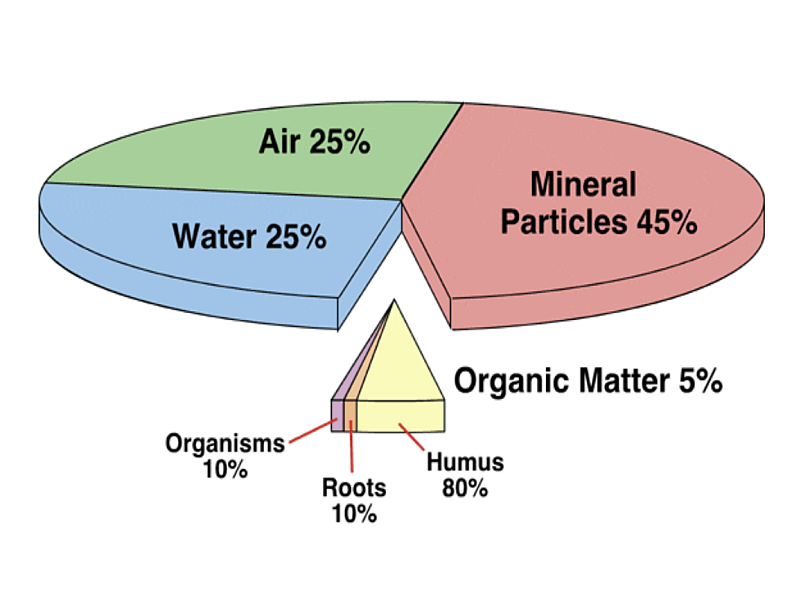
 For thousands of years, Mother Earth has sustained all forms of life through a delicate yet powerful foundation:living soil, enriched with organic matter. In healthy soil, organic matter may make up only a small percentage — sometimes around 5% — yet it plays an important role in holding water, feeding beneficial microorganisms, and supporting life.
When harsh farming practices and the excessive use of chemicals damage this living system, organic matter declines, the soil loses its ability to hold water, beneficial microbes disappear, and the earth becomes dry, hard, and lifeless.
Modern humans are experiencing a similar drought within ourselves. Swept along by the tide of modern convenience, the pressure to succeed, and the endless illusions created by a busy society, we are slowly losing our own 5% of “soul organic matter”—the voice that is most original and true to us.
The remaining 95% — our knowledge, skills, and social expectations—may keep us functioning smoothly, like a machine. Yet deep inside, our souls can become dry, exhausted, and vulnerable to life's storms.
The Journey Back to Our Roots
To restore the soil within us, using our minds alone is not enough. Endless analysis and complex philosophies cannot always lead us back to our true selves. We need to return to nature and reconnect deeply with the Earth, Water, and Forest, as many people who live close to the land have done for generations.
A natural garden can serve as a gentle filter. It softens the noise of the city and the flood of information, giving the mind a quiet place to rest.
To immerse ourselves fully in a garden is to bring our whole body and mind into the present: watching a fallen leaf slowly break down and become part of the soil, observing a gentle stream find its own path, or noticing how wild grass gradually covers and heals the bare places on the earth.
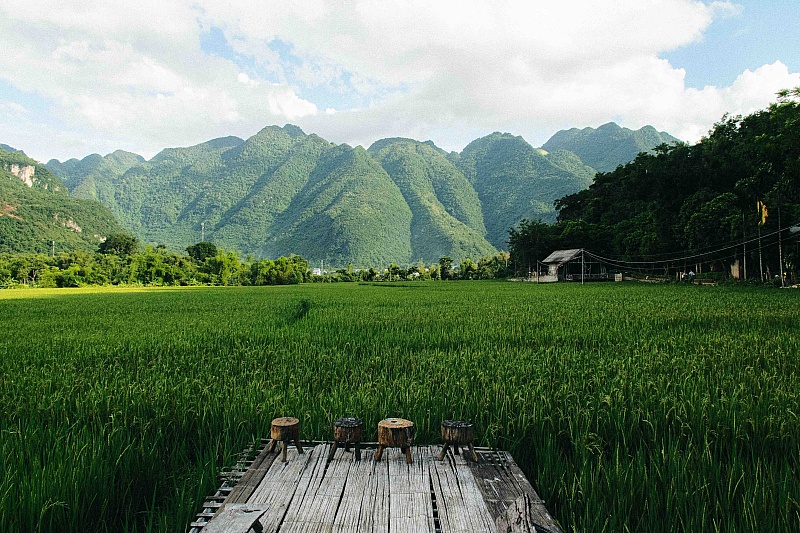
There are no rules to force upon the moment and nothing we need to make happen. We can simply allow our worries, fears, and attachments to fall away like dry leaves returning to the earth.
When the mind releases its need to control everything, a quiet, open space appears. In that space, our inner voice can begin to speak again. It may come as gently as a cool breeze, yet become an anchor that helps us stand firm when life's storms arrive.
Life Is Naturally Simple
The farther we move away from nature, the more complicated life can become. We create endless problems through complex ideas, ambitious plans, and constant anxiety. Then we struggle to use our minds to solve the very chaos we have created, often drying out our inner soil even more.
Yet some basic truths of life are simple and grounded.
To nourish the body
A healthy body does not need magic or complicated formulas. It needs the simple gifts of nature: fresh air, sunlight, clean water, nourishing food, rest, and movement. When these basic needs are met, the body's natural systems can do much of their work to maintain balance and support healing.
To care for the mind
A clear, healthy mind doesn't need concrete walls and glowing screens. Our inner lives need the open, living space of nature—a place where trees do not judge us, measure our success, or demand that we solve every problem.
When the body is nourished by the breath of the Earth and Sky, and the mind is held gently by nature, many of modern life's illusions can begin to fall away.
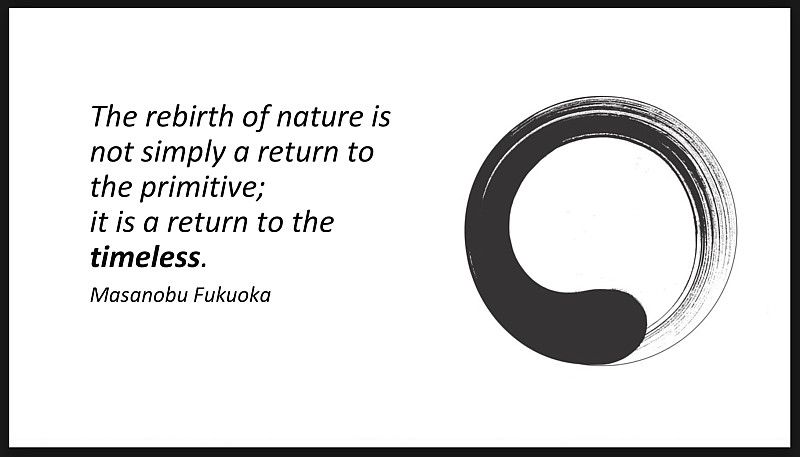 We do not need to fight these illusions or try to manage every thought. We can simply step back from them and return to our place within the natural world.
Then quiet and peace are no longer just beautiful words on a page. We begin to feel them in every breath, every sip of clean water, and every steady, barefoot step on the earth.
Perhaps the journey from the soil to the soul is not about becoming someone new. It is about returning to who we have always been beneath the layers of expectation, fear, and social pressure.
Just as the soil can recover when we stop damaging it and begin to care for it, our inner lives can become fertile again when we give ourselves time, space, and a deeper connection with nature.
We do not have to force ourselves to grow. We only need to create the right conditions for life to return.
When we care for the soil, we care for life. When we reconnect with nature, we create space to reconnect with ourselves.
The Illusion of Perfection: Keeping our Feet on the Ground in the AI Era
A 30-page design report for the family garden flashed on the screen. The structure was perfect, the words flowed smoothly, and every single tree and leaf was detailed. Anyone looking at it would gasp in amazement at how complete it seemed. But walking out into the real garden, comparing those lifeless words with the breathing earth, a vague fear suddenly took over. Those polished solutions were completely "blind" to the harsh sun, the changing winds, and the joys and sorrows of the people living on that land.
This is my own experience.
That is the exact moment I realize a giant trap of the digital age: The dangerous swap between a beautiful appearance and the truth of living reality.
Artificial Intelligence (AI) today is like a bag of chemical fertilizer, perfectly mixed in a lab. It has the power to gather 95% of humanity's surface knowledge at the speed of light. But it will forever lack the 5% "organic matter" — which is the true soul of the field, the living microbes of the soil, the sweat, and the deep culture of a local place. Without this core 5%, everything that looks magnificent on paper is completely empty.
The scariest thing is not that AI might give the wrong answers. The true danger is that humans are willingly giving up their ability to feel and their own critical thinking. Faced with results that are too fast and too beautiful, our minds become lazy. People start blindly trusting "simulated standards." Instead of bending down to smell the damp earth, scooping up a handful of spring water, or sitting down to listen to the community's stories, we begin to measure professionalism by the length of a report and green-sounding but lifeless buzzwords.
If this laziness spreads into a "social illusion," the consequences will be devastating. Imagine ecological plans and forestry policies that decide the fate of entire forests and thousands of lives, drawn up in seconds by an algorithm that doesn't know how to "breathe," doesn't know how to "hurt," and takes absolutely no responsibility. When that happens, the sacred relationship between humans and Earth - Forest - Water will be choked into cold checklists. Indigenous wisdom, carefully gathered over hundreds of years, will be pushed aside. It will be replaced by forced, unnatural solutions that completely destroy nature's ability to heal itself.
In this storm of technological illusions, AI is ultimately just a dry straw rake — it can gather surface data very fast, but it can never deeply understand the soil of life.
The only way to stay awake right now is to hold tight to the anchor of reality. No algorithm can replace bare feet touching the earth and a heart that listens to the heartbeat of the ecosystem. We do not reject the tool, but we must use the actual ground to question it. Let us protect the living wisdom stirring under the forest canopy, and constantly remind each other of the life-and-death line between a perfect plan on a screen and the true life breathing under our every step.
From Typing to Speaking
When I first received a garden design from AI, I had mixed feelings. I was amazed by how quickly it processed the information and how professional the report looked. But after scanning through the report, something did not feel right.
My years of working with soil and forest gardens had taught me to trust what I call my “ecological immune system.” It helps me sense when something is wrong in a living system. As I read the report, I felt that something important was missing. It looked perfect on paper, but it did not reflect the real life of the garden. It lacked a soul and a connection to the local social and ecological context.
This feeling brought me back to reality. I began to see that AI is a tool to work with, not an expert we should blindly trust. Its ideas need to be tested against what we see, feel, and learn from the land.
The surprise came when I stopped typing and started speaking.
Typing on a keyboard often makes my thoughts feel stiff and broken. I have to stop, find the right words, and type them one by one. Speaking feels different. My thoughts flow more freely, following my breath, natural pauses, and everyday rhythm.
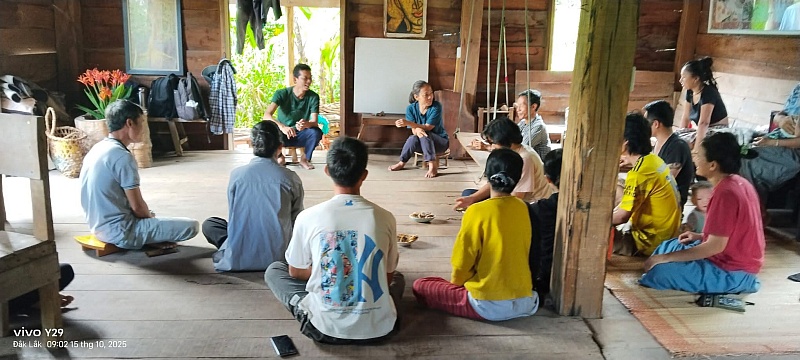
It also reminds me of how Indigenous communities have shared knowledge for generations: sitting together, speaking, listening, and learning from one another. Knowledge does not always need to be written down to be meaningful. Sometimes, a simple conversation can carry the wisdom of many generations.
The good part of speaking to AI is the freedom and flexibility it gives me. I can walk under the trees, bend down to look at the soil, notice a new plant, or feel the moisture in the ground. When a thought comes to me, I can speak it out loud right away.
My thoughts can flow naturally, following what I see and experience in the garden.
In this process, AI helps me reflect on my thoughts and see them more clearly. Like a simple rake, it helps me gather and sort my ideas without deciding what is right for me.
I remain the one who observes, feels, questions, and makes decisions. AI simply helps me think more clearly while I stay connected to the living garden around me.
For me, this is the real value of speaking with AI. It is not about making technology more powerful. It is about using technology in a way that brings me closer to the land, not further away from it.
The forest garden remains my teacher. AI is just a companion in the conversation, and it is very useful to me when I do my homework and translations.
COMMUNITY REFLECTIONS
SHARE YOUR REFLECTION