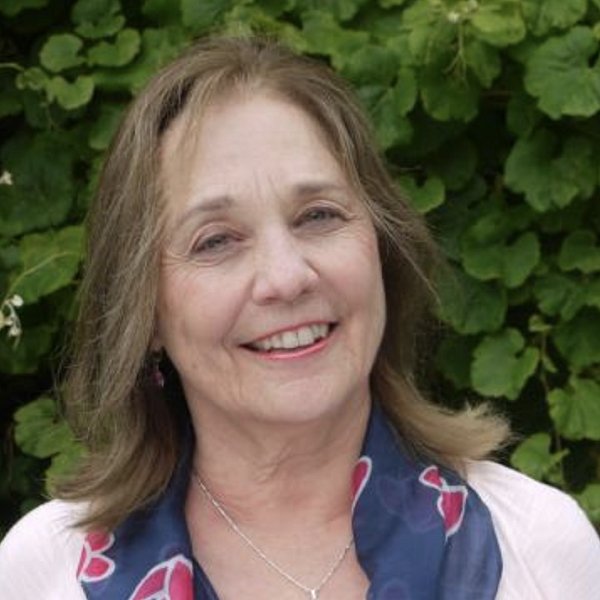
Sally was born at a US federal penitentiary where her father was a prison doctor. In high school and college in the 1960s, she worked summers in inner-city housing projects in St. Louis, Missouri…
As a listener, you join the Zoom with your video on and heart open. You
don’t speak during the conversation — your silent, attentive presence is
part of what makes the story possible. The session runs about
90 minutes.
We’ll email you the Zoom link once you’re registered.
Sally was born at a US federal penitentiary where her father was a prison doctor. In high school and college in the 1960s, she worked summers in inner-city housing projects in St. Louis, Missouri. She experienced firsthand the callousness with which the Housing Authority behaved toward the families living in the projects. After college, Sally taught civics in that same area to 8th graders, encouraging students to undertake learning projects that were meaningful to them and seeing a spark in each of them.
Seeing that this spark had to do with the Divine in each of us, Sally felt drawn to help ignite those sparks. She obtained a second Master's degree in theology and spiritual counseling, and as she contemplated being ordained a priest, her conviction to listen to people rather than preach grew crystal clear. For the next decade, she did spiritual counseling and initiated creative programs that explored the various expressions of spirituality.
While reading a speech by Václav Havel in the early 1990s, Sally was lit up by his reference to ‘’planetary democracy.” Havel said, “Planetary democracy does not yet exist but our global civilization is already preparing a place for it. It is the very Earth we inhabit, linked with heaven above us. Only in this setting can the commonality of the human race be newly created with reverence and gratitude for that which transcends each of us and all of us together.”
Her passion for democracy and spirituality came together in her decades of work with United Religions Initiative (URI). Sally is a URI founding staff member and senior consultant. URI began with a vision to promote mutual respect, cooperation and peace among religions. Today, it is a global interfaith organization with over 1050 local groups in 109 countries; together, members jointly engage in community actions such as conflict resolution and reconciliation, environmental sustainability, education, women’s and youth programs, and advocacy for human rights. Through Cooperation Circles – self-organizing grassroots groups that consist of at least seven members from at least three religions, indigenous traditions, or spiritual expressions (including atheists and agnostics) – participants learn to work together and aim to transform religious tension into positive change and build cultures of peace, justice and healing.