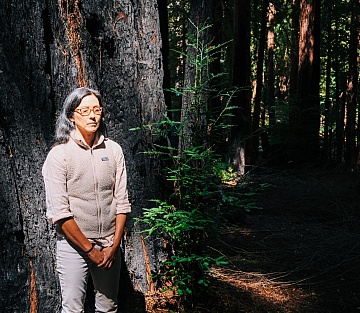
For decades, Jon Zehr chased a bacterium he could detect only by its genetic fingerprint -- "a footprint without an animal" -- while Kyoko Hagino, working from the other side of the world with no salary and a daughter who thought beaches existed only for collecting seawater, spent years cultivating an algae her own boss told her no one would care about. Neither knew the other existed, and neither knew they each held the missing half of the same discovery. When they finally found each other, what emerged wasn't just a collaboration but a rewriting of one of biology's most ironclad rules: the nitroplast, the first known organelle to evolve in over a billion years, tucked inside the tiny dot Hagino had noticed and Zehr had spent a career trying to find. "This experience has shown that we don't know which research will be useful and when," Hagino reflected -- a quiet vindication for every hour she spent hunched over a microscope, sustained by little more than curiosity and a bowl of seaweed jelly. Their story is a reminder that some of the deepest truths about the natural world are unlocked not by grand coordination, but by two people, unknown to each other, refusing to stop looking.