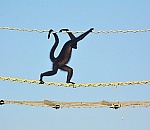
Just hours before installing the first canopy bridges near Alta Floresta, biologist Fernanda Abra found two marmosets dead on the road — a species already threatened with extinction. That grief became the baseline against which everything that followed would be measured. Eight rope bridges later, camera traps documented 15,000 safe wildlife crossings over 15 months, with not a single roadkill recorded. The bridges are elegantly low-tech: multilayered rope structures designed for primates that swing, primates that walk, and primates that use their tails — each species finding its own way across. Tufted capuchins took seven months before trusting the first bridge, a reminder, as Abra puts it, that "our sense of urgency in conservation doesn't take into account the timing of the impact." The stakes reach far beyond individual animals: when primates disappear, seed dispersal collapses, forests thin, and a whole web of interdependence quietly unravels. Brazil's federal transport department has now designated Abra's design as the national standard for highways — a rare moment when a solution born from sorrow beside a roadside becomes official policy.