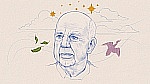
Wendell Berry spent 92 years insisting that the largest problems in the world are answered, first, in the smallest gestures -- a seed planted, a field tended, a pencil drawn across paper. The writer and farmer from Henry County, Kentucky, authored more than 50 books without a computer, was arrested twice for environmental protests, and still resisted the urgency that defined the movements he stood beside, believing that apocalyptic thinking missed something essential: "the world had no end and no beginning." As his friend and scholar Jeffrey Bilbro observed, Berry understood that "our hands are all dirty, and we're making these compromises, and it's better to be honest about the necessity to do so and try to do what we can to live right, even if we can't attain the purity that we might wish." What Berry left behind is less a set of arguments than a way of seeing -- one in which tending a handful of soil and fighting for a mountaintop are not different acts, but the same act at different scales. He trusted that a person who truly learns to belong to a place will naturally want to protect it, and that this quiet belonging is where lasting change begins.