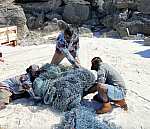
Someone tried to make a fishing net disappear. They burned it at sea, melted it into a hard wheel of plastic, and threw it overboard — but it floated to shore anyway, already breaking into microplastics. That lump of charred nylon, found on a remote beach of Groote Eylandt, is a small portrait of a vast and stubborn problem: ghost nets, abandoned fishing gear that drifts on ocean currents for years, strangling turtles, dugongs, and sharks long after the boats that lost them are back in port. Now, more than 20 Indigenous ranger teams are working the remote coastlines of northern Australia — some beaches 14 hours away along a single rough track — pulling these nets from sand and saltwater in work that is slow, physical, and never finished. The rangers of Dhimurru Aboriginal Corporation removed roughly 13 tons of marine debris from 550 kilometers of shoreline in 2025 alone. For the Yolnu people and other Traditional Custodians, the stakes are not only ecological: as one advocate put it, "when the country is sick, they are sick, and healing it heals the people." Drones guided by AI now help rangers find fifteen nets in a single morning where they once might have found three, and a new AU$25 million government commitment is keeping the patrols alive and funding upstream prevention. But perhaps the most clarifying thought belongs to Dhimurru's executive officer Stephina Salee: success, she says, will not be measured by nets removed — it will be measured by nets that never enter the ocean at all.