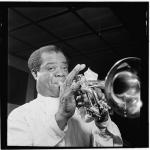
How does an act of imagination happen? How does the mind create on command? Recent experiments have attempted to figure out the mystery behind this kind of creativity, from John Coltrane letting loose on a saxophone to Jackson Pollock dripping paint on a canvas. These are works made entirely in the moment -- their beauty is spontaneous. Researchers have found that before a single note was played, jazz improv pianists exhibited a "deactivation" of the DLPFC, a brain area associated with planned actions and self-control. They were inhibiting their inhibitions, which allowed them to create without worrying about what they were creating. There was also a spike in the medial prefrontal cortex, an area often linked with self-expression. This article delves further into how creativity springs from a choreographed set of mental events.