

“O cuidado com a vida e a felicidade humanas… é o único objetivo legítimo de um bom governo.”
—Thomas Jefferson, 1809.
Todos querem ser felizes e, cada vez mais, países ao redor do mundo consideram a felicidade um indicador de bem-estar nacional e a incluem na formulação de políticas públicas. Como afirma o Relatório Mundial da Felicidade deste ano, “a felicidade é cada vez mais considerada uma medida adequada de progresso social e um objetivo das políticas públicas”. Mas o que faz as pessoas felizes e quais países apresentam os maiores níveis de felicidade?
Para o Relatório Mundial da Felicidade, os pesquisadores classificaram os países com base em fatores como expectativa de vida saudável, apoio social, PIB per capita, felicidade das crianças, capital social, economia civil, ausência de corrupção e bem-estar subjetivo. Ao compararmos esses dados com os resultados do Índice de Melhor Vida da Organização para a Cooperação e Desenvolvimento Econômico (OCDE), constatamos que os países mais felizes são aqueles que desenvolvem laços sociais mais fortes, administram melhor os bens comuns e cultivam um forte senso de comunidade.
1. Suíça
Foto: Kosala Bandara

A Suíça, o país mais feliz deste ano, apresenta índices acima da média em bem-estar subjetivo, empregos e rendimentos, renda e patrimônio, saúde, conexões sociais, qualidade ambiental, educação e habilidades, e segurança pessoal. Há também um forte senso de comunidade na Suíça, onde 96% das pessoas acreditam conhecer alguém em quem podem confiar em momentos de necessidade. Este último é o índice mais alto entre os países da OCDE, empatado com a Islândia, segunda colocada.
2. Islândia
Foto: Stig Nygaard

De acordo com o Índice de Melhor Vida, a Islândia ocupa o primeiro lugar em empregos e rendimentos, e está acima da média em conexões sociais, bem-estar subjetivo, estado de saúde, qualidade ambiental, segurança pessoal, participação cívica e educação e competências. Os islandeses também estão entre os mais satisfeitos com a vida em geral, com uma média de 7,5 numa escala de 10 pontos, uma das pontuações mais altas da OCDE, onde a média é de 6,6.
3. Dinamarca
Foto: Moyan Brenn

A Dinamarca, país mais feliz do ano passado, ocupa o terceiro lugar este ano. Líder em equilíbrio entre vida profissional e pessoal, com apenas 2% dos funcionários relatando trabalhar muitas horas, a Dinamarca também se destaca em qualidade ambiental, participação cívica, educação e qualificação, empregos e rendimentos, renda e patrimônio, e segurança pessoal.
4. Noruega
Foto de : Alberto Carrasco Casado

A Noruega é um país completo, com bom desempenho em quase todas as dimensões avaliadas, destacando-se pelo forte engajamento cívico, boas conexões sociais, qualidade ambiental, habitação, equilíbrio entre vida profissional e pessoal, entre outros. Um percentual acima da média, de 82% dos adultos entre 25 e 64 anos, concluíram o ensino médio.
5. Canadá
Foto: David Ohmer
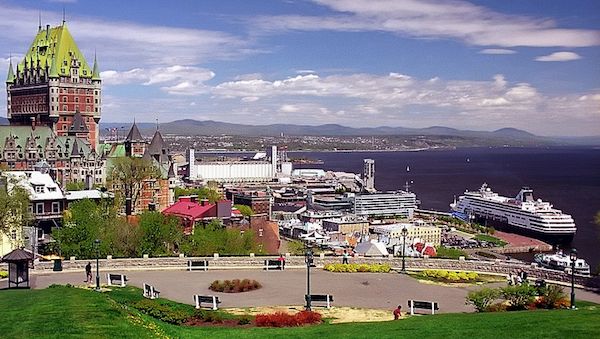
Os canadenses são saudáveis e felizes. Com 89% da população relatando ter boa saúde — um índice muito superior à média da OCDE, de 69% —, o Canadá está entre os cinco países mais felizes do mundo. O Canadá também apresenta a menor taxa de agressões entre os países da OCDE, com apenas 1,3% da população relatando ter sido vítima nos últimos 12 meses. A média da OCDE é de 3,9%.
6. Finlândia
Foto: Leo-setä

A Finlândia apresenta bons resultados em bem-estar subjetivo, participação cívica, qualidade ambiental, habitação, equilíbrio entre vida profissional e pessoal e conexões sociais. O país também dá grande ênfase à educação. O aluno médio obteve 529 pontos em leitura, matemática e ciências no Programa Internacional de Avaliação de Alunos (PISA) da OCDE, um resultado significativamente superior à média da OCDE, que é de 497.
7. Países Baixos
Foto: Alias 0591

Os Países Baixos apresentam índices acima da média em equilíbrio entre vida profissional e pessoal, empregos e rendimentos, habitação, renda e patrimônio, educação, bem-estar subjetivo, saúde e conexões sociais. O país também possui um forte senso de comunidade e altos níveis de participação cívica. Mais de 90% das pessoas acreditam conhecer alguém em quem poderiam confiar em momentos de necessidade, e a participação eleitoral nas últimas eleições foi de 75%, significativamente superior à média da OCDE, de 68%.
8. Suécia
Foto: Pelle Sten

A Suécia, país com a melhor classificação em qualidade ambiental, também se destaca em educação, equilíbrio entre vida profissional e pessoal, saúde, empregos e habitação. No que diz respeito ao engajamento cívico, a Suécia não só apresenta uma alta taxa de comparecimento às urnas, de 86%, como também uma pequena diferença na participação eleitoral entre os 20% mais ricos e os 20% mais pobres da população, o que sugere que as instituições democráticas do país promovem ampla inclusão social.
9. Nova Zelândia
Foto: Departamento de Conservação

A Nova Zelândia obteve a pontuação mais alta em saúde, com níveis consideravelmente mais baixos de partículas finas poluentes no ar do que a média (10,8 microgramas por metro cúbico, contra a média da OCDE de 20,1), e 89% dos seus cidadãos relatam estar satisfeitos com a qualidade da água. A Nova Zelândia também se destaca em participação cívica, segurança pessoal, educação, empregos e bem-estar subjetivo.
10. Austrália
Foto: Thomas Depenbusch

A Austrália ficou em primeiro lugar em engajamento cívico e acima da média em qualidade ambiental. 92% das pessoas acreditam conhecer alguém em quem podem confiar em momentos de necessidade. O país também apresenta altos índices de bem-estar subjetivo, saúde, educação e emprego. A participação eleitoral na Austrália foi impressionante, atingindo 93% nas últimas eleições, um número atribuído ao fato de o voto ser obrigatório no país.
COMMUNITY REFLECTIONS
SHARE YOUR REFLECTION
23 PAST RESPONSES
These are happy countries because it's too cold to live there, and the colonist nations haven't exploited them for their mineral and forest wealth. Africa used to be happy, and certainly latin and South America.
I think there is a more fundamental definition of "happiness" which underpins all of these other measurements to a large degree. My favorite definition, since it is very useful (anyone can use it to improve their own happiness immediately) is:
“Happiness is the overcoming of not unknown obstacles toward a known goal.”
— L. Ron Hubbard
More ICE keeps them cool, probably... Nice research. Yes indeed, the findings are true and we have to learn from them some simple things, topmost being simplicity. Back to the basics, lesser expectations improves life expectancy. Sometimes I feel having lost all sense of life, purpose in life, realities of life and the very core of life within us, due to the clutter around, the rat-race. This study made me stop and think for a moment - there is more to life... :)
Culturally and racially biased,
No mention of Saudi Arabia where the people are closest to the centre of Islam
“The care of human life and happiness…is the only legitimate object of good government,”
—Thomas Jefferson, 1809.
Even though it's not perfect, Canadian government pays enough attention to our children's education, medical and social engagements. Many foreign students are studying at Canadian Universities, why don't you ask them why they chose Canada.
What really makes Canadians happy, though? We're not Americans!
You guys & gals are totally missing the point so you clearly don't even know what happiness is.
you seem to have based all your (assumptions) on a very skewed index of numbers and statistics and SAFETY and SECURITY and WEALTH and PHYSICAL COMFORT, all of which are NICE but have nothing to do with real happiness. What happened to laughter, dancing, dogs and children playing in the street, skinned knees and dirty faces, simplicity and tolerance, none of which are allowed (in the US anyway) for fear someone may get (DOG forbid) hurt.
So, my suggestion is you change your guidelines for happiness determiners, go do some travelling in places you've never been before, maybe, just maybe you'll see some real happiness.
GET EM BOYZZZ!!!!
ASSEMBLE!!!
ASIANS ASSEMBLE!!!!
WE WANT ASIA!
ASIA
ASIA
ASIA
ASIA
ASIA
ASIA
ASIA
ASIA
ASIA
ASIA
ASIA
ASIA
ASIA
ASIA
ASIA
ASIA
ADSHFSJF SF LSASSSIAAAA POWERRRRR
GO GO ASIA!!!!
ASIA ASIA ASIA ASIA
ASIA IS HAPPY
ASIA IS HAPPPYYY
WHERES ASIA!!!!!!
DID U EVEN BOTHER TO RESEARCH ON ASIA?!?@!?!??!?!?@#!@312313123123123!@#@#!*@(#!(@*#&(!@*#(*!@&#(*!@$*&!@#&!(@#)!@*#(!@#
racist.....
This list makes the American in me sad. :(
Happiness is a valuable and honorable life goal. Studies show that by increasing the happiness and well being in convalescent homes, we reduce cost. We have found that the body's natural "Self Healing Relaxation Response" is more in gear in a state of happiness thus creating positive emotions. New business models embrace the Employee and Customer happiness as a more effective and ultimately efficient strategy. So, now that paradigms agree. Let us join together and create an abundant and happy world!!!!
What a glaringly white list.
how many countries are in the world? nothing seen from other parts of the world! what was the criteria for the evaluation?
I find this information about the happiest countries interesting and helpful. Also, it is important to emphasize what research shows about the relationships between economic inequities within countries and the well being of all of its citizens--both those with the greatest income and wealth and those with the least. Those countries with the greatest economic inequities have the lowest level of overall well being of all of its citizens. In the United States our internal economic inequities are the greatest among the so-called most advanced (i.e. economically richest countries) of the world. So it is no surprise that we don't rank at the top of citizen's well being and happiness.
Interesting that all the Scandinavian countries were in the top 10; having visited both Sweden and Denmark and having friends in all of those countries, I can tell you from a personal view, what is stated is true. They have much more security and their well being is seriously looked after. time we listened and learned more and then followed through with Action to replicate that they are doing regarding education, health care and taking care of each other. <3
Wondering where the US falls on this list, I would suspect a bit far down given that our education is cost prohibitive, our health care costs are absolutely out of control (both Clinton and Obama have tried hard to make a positive impact on this) and here in the US most employees receive only 2 weeks of vacation a year. Insane. Thank you other countries for showing us how it can be done and that Happiness is important and of value! hugs my my heart to yours