
“Enquanto a pobreza persistir, não haverá verdadeira liberdade.” - Nelson Mandela
.jpg)
O que promove a verdadeira liberdade? Kim Feinberg, membro da Ashoka, acredita que a resposta para essa pergunta essencial reside em uma educação holística:
A história de Kim Feinberg começa com o incentivo à empatia em crianças sul-africanas por meio de aulas de história oral sobre discriminação e intolerância. Mas, à medida que sua história se desenrolava, o desenvolvimento da empatia tornou-se apenas um componente de seu trabalho para educar e empoderar os jovens mais vulneráveis e carentes do país. Através de sua organização , The Tomorrow Trust , Kim vislumbra um caminho para a verdadeira liberdade pós-apartheid para os jovens sul-africanos.
Em 1997, após trabalhar para a Fundação Shoah documentando histórias de sobreviventes de genocídio e opressão, ela fundou a Fundação para a Educação da Tolerância.
Foi por meio de um currículo que incluía histórias do Holocausto Judeu e do Genocídio de Ruanda que ela apresentou relatos de discriminação e intolerância sistemáticas a uma nova geração de estudantes sul-africanos que não tinham uma experiência pessoal com o apartheid. Kim foi eleita membro da Ashoka em 2003 .
A Fundação para a Tolerância na Educação ganhou força nas escolas sul-africanas e alcançou milhares de alunos, porém Kim logo percebeu que o país enfrentava problemas mais profundos. E foi um relato oral sobre os órfãos da AIDS na África do Sul que lhe abriu os olhos.
.jpg)
"O momento 'eureka!' foi quando percebi que você pode ensinar habilidades para a vida, como fizemos com a Fundação Tolerância, mas se isso não for fundamentado em um diploma acadêmico, qualificação ou habilidade específica, não funciona, porque ninguém contrata alguém apenas por habilidades para a vida." - Kim Feinberg
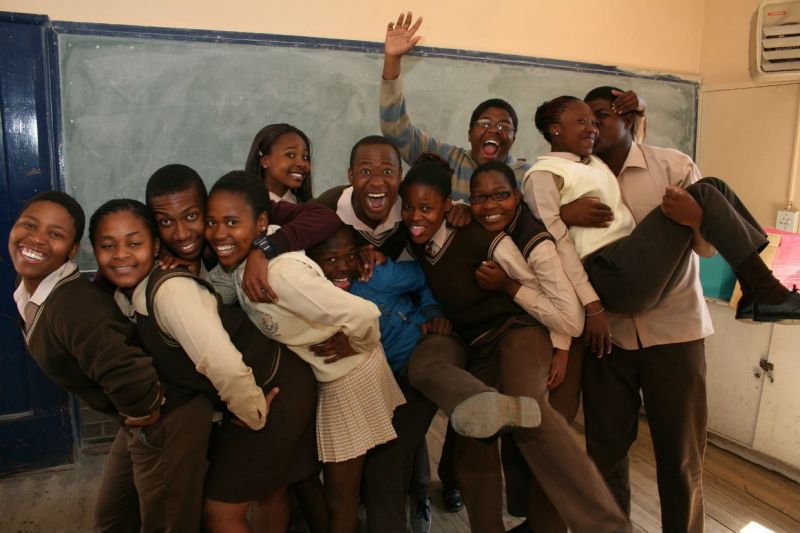
Preenchendo as lacunas
A África do Sul continua a enfrentar altas taxas de HIV/AIDS; segundo a UNICEF , em 2012, 17,9% dos adultos sul-africanos eram soropositivos e 2,5 milhões de crianças perderam os pais para a AIDS. Sem modelos adultos ou sistemas de apoio, muitos desses órfãos dependem de uma rede fragmentada e ineficaz de organizações de assistência social de base e escolas mal equipadas para trilhar o caminho rumo à vida adulta.
A Tomorrow Trust complementa o aprendizado de crianças a partir do Jardim de Infância (5 anos de idade) até a conclusão do Ensino Fundamental. Isso é feito por meio de apoio acadêmico e psicossocial extracurricular, aos sábados e feriados. Além de alfabetização, matemática, coordenação motora fina e informática, os professores incentivam as crianças a fazer perguntas e a desempenhar um papel ativo na realização de seu próprio potencial.
Aproximadamente 60% dos jovens adultos que concluem o Ensino Médio como alunos da Tomorrow Trust são aceitos no programa de ensino superior da organização, voltado para estudantes universitários. Isso contribui ainda mais para o seu desenvolvimento pessoal por meio de workshops e mentorias.
Desde a sua criação, 2.000 jovens participaram do programa Tomorrow Trust. Ao ensinar órfãos a se tornarem exemplos para suas famílias chefiadas por crianças e incentivá-los a superar uma mentalidade de vítima, Kim estima que o Tomorrow Trust tenha impactado indiretamente seis vezes mais pessoas.
“Se a Tomorrow Trust cria modelos positivos, isso transforma suas famílias e comunidades, porque elas passam a enxergar uma história muito diferente e a desejar também”, diz Kim. “Assim, temos um enorme efeito cascata.”
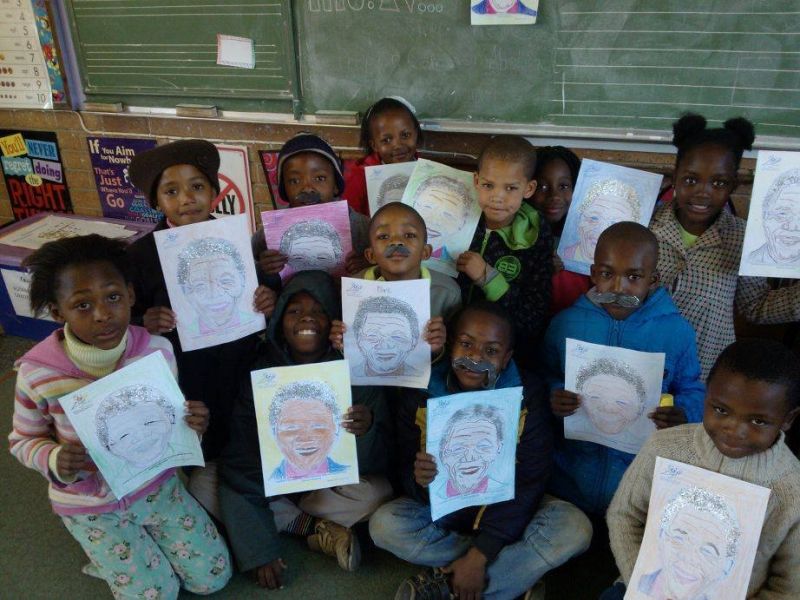
A gratidão gera empatia.
O ciclo de vida do Tomorrow Trust é projetado com um sistema de feedback, no qual os estudantes do ensino superior devem dedicar 10 horas por ano auxiliando o grupo de alunos do ensino fundamental. Além disso, os ex-participantes do Tomorrow Trust são convidados a doar 10% de seus salários durante os dois primeiros anos de vida profissional para apoiar o programa.
Kim afirma que os beneficiários do Tomorrow Trust se tornam mais empáticos à medida que o programa os ensina a serem gratos pelo que têm.
“Depois que ensinamos isso a eles, nós os encorajamos a impactar os outros de uma forma muito positiva”, diz ela. “…porque agora eles se veem como tendo mais do que outras pessoas. Então eles não se veem apenas como pessoas que passaram por um trauma, mas sim como pessoas que vêm de um lugar de gratidão.”
À medida que a Tomorrow Trust amplia seu impacto, ela agregará mais profissionais gratos e empáticos ao setor corporativo da África do Sul, preparados para dar continuidade ao ciclo de feedback, ajudando outras crianças vulneráveis. Ex-alunos da Tomorrow Trust estão se destacando como advogados, engenheiros e profissionais da área financeira em importantes empresas sul-africanas e multinacionais, e dois ex-alunos fazem parte do conselho administrativo da Tomorrow Trust.
Kim espera que, um dia, um ex-aluno do programa ocupe seu lugar como CEO. Por ora, sua missão é expandir a capacidade da Tomorrow Trust e disseminar a verdadeira liberdade — como Mandela a chamaria — para o que, de outra forma, poderia ser uma geração de crianças perdida.
“São as pessoas mais poderosas e inspiradoras que me fazem levantar da cama todas as manhãs”, diz ela. “E se forem capacitadas, vão criar um país muito diferente num mundo muito diferente.”

COMMUNITY REFLECTIONS
SHARE YOUR REFLECTION
1 PAST RESPONSES
please join me celebrate the life of Venerable Sr. Irene Stefan in kenya during his
BEATIFICATION here in kenya. see here for details as hundredts os thousands of Catholic follows arrive here in Nyeri.
http://www.dkut.ac.ke/newsn...
THE POPE ANNOUNCES THE BEATIFICATION OF A CATHOLIC NUN IN THE ARCHDIOCESE OF NYERI ON SATURDAY 23RD MAY 2015
A photograph representation of a portrait of
Venerable Sr. Irene Stefani who served as a
nurse at Mombasa during the 2nd World War in 1914-1918
THE POPE ANNOUNCES THE BEATIFICATION OF A CATHOLIC NUN IN THE ARCHDIOCESE OF NYERI ON SATURDAY 23RD MAY 2015.
VENUE- DEDAN KIMATHI UNIVERSITY OF TECHNOLOGY
Compiled by Rev.Fr.Prof Donatus Mathenge Githui 16th January 2015
Dedan
Kimathi University of Technology is again on the global map this time
round not on the technological platform but on religious, cultural and
heritage grounds. Named after the heroic Mau Mau fighter, Field Marshal
Dedan Kimathi, the University has been accorded the privilege to host
the Beatification ceremony of the Venerable Sr. Irene Stefani who lived
and died at Nyeri Archdiocese in the early 1930’s. By accepting to host
this event, Dedan Kimathi University of Technology contributes to the
reconstruction of the rich Kenyan’s intangible cultural heritage. Just
like the Mau Mau war tale is interwoven with Dedan Kimathi, the story of
Sr. Irene will be incomplete without the mention of Dedan Kimathi
University of Technology in the years to come.
By
hosting the event, the University becomes part and parcel of the Sr.
Irene’s religious itinerary that pilgrims from all corners of the world
interested in her life would hardly ignore. This in itself enhances the
University’s visibility tentacles nationally and internationally. The
story of Sr. Irene told in this century will richly boost the heritage
value of the planned Dedan Kimathi Cultural Centre, the symbol of the
university’s commitment to walk the talk of conserving heritage. The
University is therefore poised to become a global pilgrimage tourist
destination thus enhancing Kenya’s tourist product. Plans are underway
to ensure the success of this history making event of the Beatification
of venerable Sr. Irene Stefani to be held on Saturday 23rd May 2015 at the graduation grounds.
In
the Catholic Church, Beatification is one step away from Sainthood
which is the highest honour bestowed on Catholic Christian who died
after living an exemplary life or expression of heroic deed or by way of
martyrdom.
Why Dedan Kimathi University grounds
Having
received and examined relevant documents concerning Sr. Irene Stefani
and her heroic virtues, which she expressed in her life, having also
been satisfied that the canonical/legal due process and procedure have
been followed by the relevant office, the Holy Father Pope Francis
raised the servant of God Sr. Irene to the canonical status of Venerable
and announced that she is a candidate for beatification on Saturday 23rd
May 2015 in the Archdiocese of Nyeri. When the Archbishop of Nyeri
Most. Rev.Peter Kairo was give this papal announcement and direction, he
immediately started looking for a venue for this important
Beatification ceremony since Kenya has never had a blessed who has
served and died in the country. According to directions from
Vatican/Rome, the venue must be proximate to the cathedral of the
diocese, connected to a tarmac road and the ground must be big enough to
accommodate a huge crowd and parking places for Christians coming from
all over the world. Most Rev.Peter Kairo wrote a formal letter
requesting the Vice Chancellor of Dedan Kimathi University whether the
ceremony of the Beatification could be held at the university grounds.
After the meeting of the university management the permission was
granted. That is why some of you have seen the name of the university in
the daily papers where the story of Sr. Irene Beatification has been
featured. The ceremonies of the Beatification will indeed, be a great
honour to the University community on the material day and years to
come.
Life and times of Sr. Irene
Sr.
Irene was born in August 22, 1891 in Anfo, a small village in Northern
Italy. She joined the Consolata Missionary Sisters in 1911 and she was
trained in religious life as well as a nurse. In 1914, she took her vows
a s a sister and soon after was sent by Blessed Joseph Allomano the
founder of Consolata fathers and sisters missionaries to Kenya. After a
long and exhausting journey by ship, she arrived in Mombasa on January
1915.
As
you are well aware, the Second World War had already begun in 1914.
When she arrived in Mombasa she could not come upcountry. Because of her
training in nursing, the British asked her to take care of the soldiers
and Courier Corps
who were wounded in the war both in Mombasa and Tanzania. As the war
was ending she was able to come up country and join the Consolata
missionaries in Mathari, the headquarter of the vicariate/Diocese ready
to give her services the people of Nyeri.
Her exemplary life at Gikondi in Mukurweini Sub-County
Sr.
Irene was sent to serve with other sisters at Gikondi Parish as a
nurse. She gave herself, body and soul as a nurse giving healthcare,
caring for the sick. It is said by some of her contemporaries that many
were the times that she spent the whole day without eating in order to
serve many patients. Because of this loving service and total
dedication, the people of that area nicknamed her as “Nyaatha” which is a
name translated as “a person of mercy”.
According
to the documents that the missionaries kept in Gikondi Parish, it is
written that there was an epidemic of plague and Sr. Irene got sick soon
after arriving in that area. She contracted the disease as she was
treating one of the patients even after being warned by other sisters
not to attend to the patient because she could be affected. Out of love,
faith, dedication, prayer and full obedience to God, she identified
herself with the sick, the hopeless and the dying. These heroic virtues
are the DNA that makes one a blessed and a saint. She died on 31st October 1930. She was buried at Mathari Diocesan cemetery.
Four Stages in the canonisation process in the Catholic Church
Servant of God is the first of the four steps in the canonization process.
Venerable, is being declared upon a decree of heroism or martyrdom by the honored after through investigation in his or her life by the relevant offices in the Catholic Church.
Blessed;
after clear miracles which are evaluated by medical doctors and church
the venerable is raided to the statues of a blessed. Hence the ceremony
of Beatification which is only decided by the Pope The blessed begins to
appear in the church calendar throughout the world.
Saint; After more scrutiny and acknowledgement of other miracles by the office of Congregation for the Causes of Saints,
the blessed is announced as a saint by the Pope and the event of
sainthood is conducted by him or a delegate. Sainthood completes the
process of canonization.
In the 2nd, 3rd and 4th
stages, miracles are expected to be done after people with sicknesses
or any other extraordinary deeds done by God through the intersession of
the servant of God, venerable, or blessed. These stages may take a
short or a long time or even a contrary or beyond. No doubt Venerable
Sr. Irene has passed the first two stages before becoming a blessed in
May. Such miracles have happened in Mozambique and were verified by the
church and independent medical doctors.
Tribunal of investigating the life of Sr.Irene
Following
the canonical procedures, the Vatican through the office of Causes of
Saints raised the status of Sister Irene to that of the Servant of God
in the early 1970’s. Soon after, Vatican directed two tribunals to be
set up to inquire about her life. The tribunal in Turin, Italy was
established to focus on her life based on her writings while the
tribunal in Nyeri, Kenya was to focus on her heroic virtues as
demonstrated by her life in Nyeri, particularly Gikondi Parish.
Rev.
Fr. Pascualleti and Sister Gian Paola were sent officially in Kenya to
bring this message to the late Bishop Gatimu. Very soon, the tribunal of
Nyeri was established and Fr. Mino Vaccari was appointed as Chairman
and Rev.Fr. Prof. Donatus Mathenge was appointed as the secretary
(Notarius) to the tribunal. When Bishop Gatimu concluded the tribunal
work and signed, the report was packaged and addressed to the office of
causes of the Saints in 1986. As it is expected, Bishop Gatimu was
supposed to take the documents to Vatican, and just when he was about to
start his journey a malady overtook him leading to his death on 20th
February 1987. After Easter of the same year, the Notarious, Fr. D.
Mathenge, was given the task of taking the documents to the Vatican.
The day of Beatification
The
Holy Father Pope Francis is the one who is supposed to come for the
beatification. But due to his tight schedule, he delegated His Eminence,
Angelo Cardinal Amato, the Prefect of the Congregation for the, Causes
of Saints at the Vatican, Rome. There are three critical events. On 22nd
May 2015 there will be a vigil/kesha at Gikondi parish for the purpose
of Spiritual preparation by Christians. The 23rd is the big day of
Beatification at Dedan Kimathi University grounds.
On Sunday the 24th,
the relirics (blessed remains) of blessed Irene will be taken in a big
procession from Mathari church to the Cathedral where they will be
placed in a new tomb which will be a point of reference as a shrine in
future years.
The impact of Her Heroic life and culture or virtues to the youth today
The
heroic virtues of Sr. Irene are relevant to the society today
especially to the youth who are the leaders of today and tomorrow
regardless of their religious affiliations.
The
Beatification of Sr. Irene Stefani and, hence, the recognition of her
virtuous life shall be outstanding as an immeasurable contribution to
the development of the history, culture, and value system of the
University and without doubt, shall be a reference event in years to
come for alumni and stakeholders of this University.
Compiled by
Rev. Fr. Prof. Donatus Mathenge Githui
Ag. Head of Chaplaincy at Dedan Kimathi University
and
Chairman;
Publicity Committee, on the Beatification
of Venerable Sr.Irene Stefani in Nyeri Archdiocese
[Hide Full Comment]