Prosper Chanda cried himself into school at three years old. Not because his friends were going—he just felt incomplete without learning. Within a week, he was solving algebraic equations. By year's end, he ranked first in his class. Most kids in Zambia start first grade at seven or eight.
On paper, that sounds like a feel-good prodigy story. But here's what actually happened: Prosper spent his childhood feeling completely alone.
While his classmates focused on exams, he obsessed over questions that didn't have answer keys. How did the universe actually begin? Can gravity really explain everything? At fourteen, without a mentor or any institutional support, he wrote his first research paper proposing new frameworks in physics. It conflicted with established theories. It didn't work. But he kept going anyway.
His peers didn't get it. "Young researcher" wasn't a compliment—it was confusion mixed with distance. The isolation was real. Think about it: when you're passionate about something your friends don't understand, when your interests don't fit into the boxes everyone else checks, belonging becomes complicated. You're there, but you're also somewhere else entirely.
Prosper taught himself through university lectures from MIT, Cambridge, Oxford, and Stanford—institutions he'd never stepped foot in. When he hit a problem he couldn't solve, he'd write it down, test every method he knew, then go for a walk. Sometimes the answer came while he slept. "The mind needs space before it recognizes structure," he says.
Then came 2024. After finishing school, Prosper applied to Northwestern Polytechnical University to study Aerospace Engineering. He missed the entrance exam date. Automatic rejection. For someone who'd built his entire identity around learning, who'd sacrificed social connection for intellectual pursuit, this moment nearly shattered him. He seriously considered giving up.
Here's where the story gets interesting. Instead of quitting, he intensified. By the end of 2025, at seventeen, he'd earned eight diplomas and six certificates in fields ranging from computer vision to aerodynamics. He published research attempting to connect general relativity, quantum mechanics, and electromagnetism. He received the Philippines Excellency Award and became the youngest member of both the World Research Fellows of London and the African Materials Research Society.
But Prosper actively rejects being called a genius or prodigy. "I do not believe I am more talented than others," he insists. "I believe in disciplined persistence. Consistency, not labels, determines outcomes."
That distinction matters. Calling someone a genius suggests they were born special, that their achievements are unreachable for the rest of us. Prosper's saying something different: he just couldn't ignore what pulled at him. He founded Genius Hub, a research organization for young people worldwide, because he remembers how isolating curiosity feels when you're the only one asking certain questions.
His advice cuts through the usual "follow your passion" clichés: "You don't find your passion by waiting for it to find you. You find it by paying attention to what you are most exposed to, most drawn toward, most unable to leave alone. And then you follow it—not because everyone else is, but because something in you won't let you do anything else."
What would YOU do if your deepest interest isolated you from your peers? If the thing that made you feel most alive also made you feel most alone? Would you choose belonging or would you choose the questions you can't stop asking? And here's the harder question: do you actually have to choose?
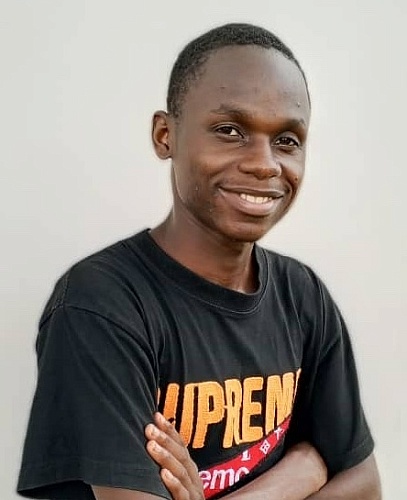 Prosper Chanda is a 17-year-old independent researcher from Zambia. He is the founder of the Genius Hub, a global research initiative for young people, and the author of published work on unified physics. He is currently awaiting admission to Northwestern Polytechnical University in China. The story above emered from a
COMMUNITY REFLECTIONS
SHARE YOUR REFLECTION
8 PAST RESPONSES
Well done Prosper