
Boisseau compared it to the way people get their electricity bills. Because they can see the charge fluctuating based on their consumption habits, they'll be incentivized to waste less in order to pay less. “The best way of making sure that people are very concerned with what they put in a bin or a container is to pay for it individually instead of [through] taxes,” she said. Indeed, this principle has been put to use in thousands of towns worldwide, from Berkeley, California, to Austin, Texas, some of whose pay-as-you-throw policies have contributed to municipal solid waste reductions of 50 percent or more . Waste experts say these policies are some of local governments' “ most effective tools for reducing waste .”
Smicval is still sorting out the details of the new system, which is unlikely to be fully adopted until at least 2027 or 2028. In the meantime, Smicval expects to see significant cost savings from fewer and shorter garbage truck routes, which it will use to fund some of its other waste-reduction projects: things like a pilot program for reusable diapers, political advocacy for a bottle deposit bill, a 10,000-signature petition asking grocery stores to eliminate unnecessary plastic packaging, and a Roubaix-esque “zero-waste cities” program, in which Smicval distributes reusable cleaning products and informational pamphlets to the residents of participating municipalities.
Barnett, the behavioral scientist, applauded Smicval for using a broad range of strategies to encourage zero-waste. “They are attacking this from different angles,” she said.
Still, she and the other behavioral scientists Grist spoke with noted the risk of backfire. Although small hassles can be “quite impactful” in catalyzing behavior change, Wright, with Ideas42, said they can also go too far and encourage noncompliance. For something like centralized waste collection or a pay-as-you-throw system, this could mean people dumping their waste illegally or finding a workaround that allows them to open the trash receptacles more often than what they're paying for. Wright said the program's success will hinge on specific design considerations, like the way direct invoicing is presented to customers.
If Smicval's waste-reduction policies are particularly unpopular, Boisseau said it's even possible that a conservative slate of candidates could be elected to the organization's board and walk back or weaken its environmental initiatives. Already, Smicval has gained critics who say that centralized waste collection is too onerous. These include the mayor of Libourne, the largest city in Smicval's territory, who at a meeting last year predicted that the organization's strategy would turn Libourne into “ a trash can ,” with people dumping garbage on the streets. If these critics were to mobilize the population against Smicval's agenda, Boisseau said, “we know they would fight hard.”
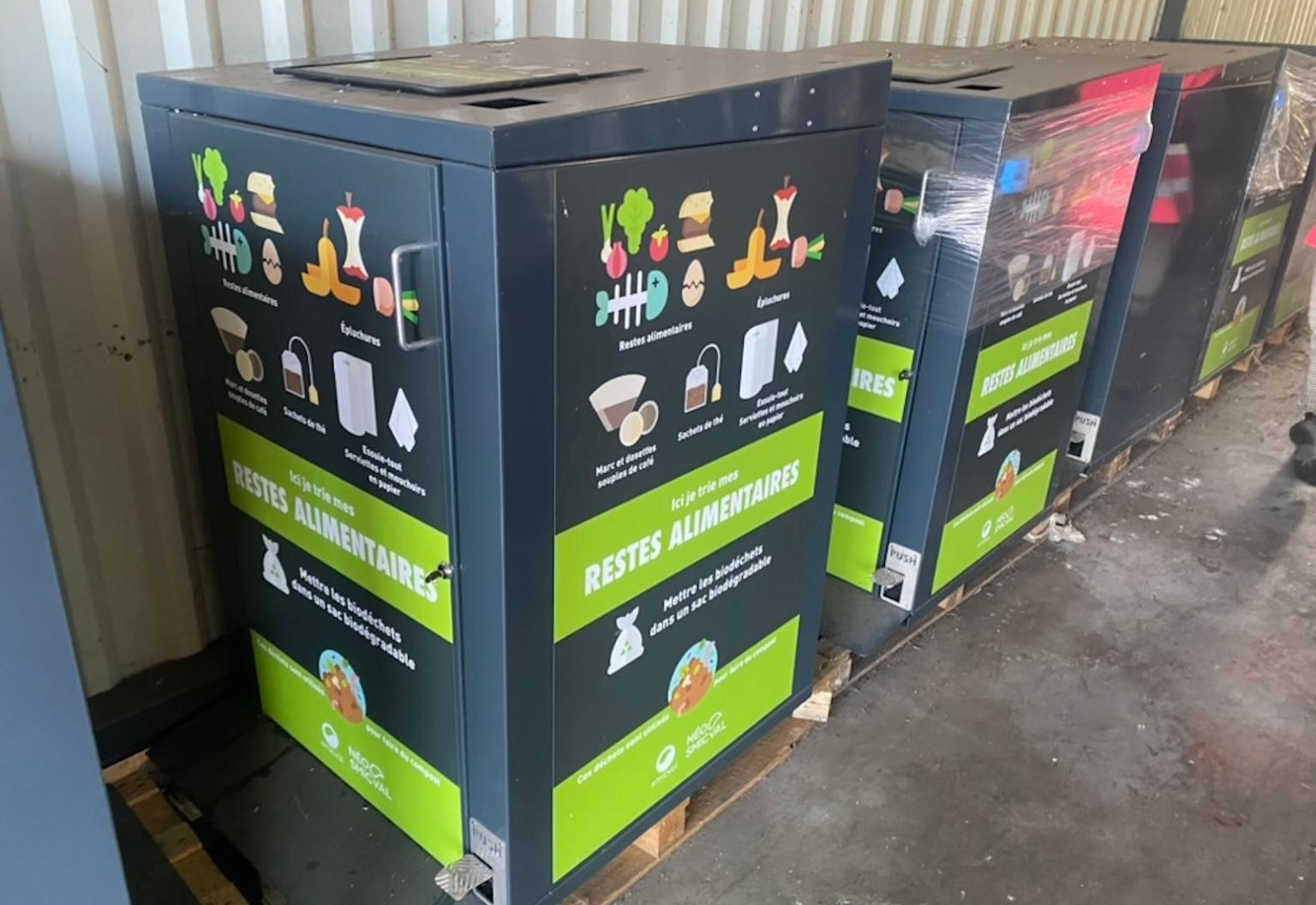
फ्रांस में भी इसी तरह की समस्या राष्ट्रीय स्तर पर सामने आ रही है, क्योंकि देश 1 जनवरी की समय सीमा तक अपने सभी घरों में खाद बनाने के पात्र उपलब्ध कराने की तैयारी कर रहा है। जानकारों को आशंका है कि यह प्रक्रिया एक " दुःस्वप्न " साबित होगी और "बहुत से लोग इसमें भाग नहीं लेना चाहते।"
Smicval is aware of the obstacles it faces and has been proactive in its efforts to preempt or overcome them. As it slowly transitions to centralized waste collection, for example, the organization is going city by city and saving Libourne for last, hoping that a successful rollout in some of its more supportive municipalities will assuage fears in Libourne. To avoid backlash, it has also consulted with individual citizens to hear their concerns, act on their feedback, and — in some cases — design project proposals to be presented to Smicval's board.
We try to work with citizens, rather than for them, Derot said. “They know what they need.”
शून्य अपशिष्ट के अनेक लाभों के बावजूद, इस आंदोलन को कभी-कभी उपभोक्ताओं पर अधिक ध्यान केंद्रित करने के कारण आलोचना का सामना करना पड़ता है, जबकि इसका उद्देश्य निर्माताओं पर कम ध्यान देना है। अगर पेट्रोकेमिकल उद्योग 2050 तक प्लास्टिक उत्पादन को तीन गुना से भी अधिक बढ़ाने वाला है, तो लोगों से थोक सामान खरीदने या कचरा निपटान के लिए अधिक भुगतान करने के लिए क्यों कहा जाए?
“We are kind of tired of everyone saying it's on the citizens' part” to reduce waste, Debrabandere, with Zero Waste France, told Grist. She and other environmental advocates agree there's an urgent need for waste-reduction policies that are even more aggressive than France's current ones — for example, mandatory waste sorting in all restaurants, as well as more stringent requirements for the use of post-consumer recycled content and a faster phase-out of single-use plastics.
But the zero-waste policies of advocates' dreams will require even more intensive behavior shifts than those that Roubaix and Smicval are trying to navigate. For example, imagine a world where France — or any developed country, for that matter — bans products from being sold in disposable containers. This would require people to deal with new enforcement infrastructure at the local level, to shop at new businesses that can accommodate reusable and refillable product systems, and to lug around their own jars and jugs and bottles.
There are many, many other routine habits that consumers will have to dispense with or fundamentally alter in order to create a zero-waste economy , like buying plastic toothpaste tubes and getting takeout in throwaway packaging. The work that Roubaix and Smicval are doing in France is an early part of that process. By figuring out how best to engage their citizens on behavioral change, they are helping to create a smoother path toward the deeper, more radical changes that advocates hope are coming in the near future.
Barnett said there's also value in the work Roubaix and Smicval are doing to understand zero-waste behavior in their respective regions. Behavioral scientists used to think humans could be characterized by a set of “universal truths,” Barnett said. But that's less the case now: “We need to go in there and figure out more about the environmental context, the people that are there,” she explained.
Meanwhile, as Roubaix and Smicval continue to try to win over new residents, they both have the benefit of an unusually enthusiastic army of supporters. Nieuwjaer isn't the only zero-waste devotee who's all too eager to proselytize about the simple joys of reducing waste. Chloé Audubert, who has spent the past two years working at one of Smicval's sorting centers, said she loves helping people sort and limit their déchets enfouis — their waste destined for the landfill. And Otimi, the Roubaix resident who leads a family of 10, could barely find the words in English to express what Roubaix Zéro Déchet has meant to her. “This program changed my life,” she finally said.
COMMUNITY REFLECTIONS
SHARE YOUR REFLECTION
2 PAST RESPONSES