
When "the Compassion Guy" was killed, his sister was presented with the ultimate test of forgiveness and compassion.
In April 2023, my brother David Breaux — popularly known as “the Compassion Guy” in Davis, California — was stabbed to death as he slept on a bench in the town’s Central Park.
He’d earned that nickname after spending 14 years collecting definitions of the word “compassion” from passersby in a notebook or on video. This grew out of a personal awakening he had in 2009, when he gave away all of his possessions to devote his life to a higher purpose, one that included living without stable housing, approaching each day without expectation, and embracing simplicity and minimalism.
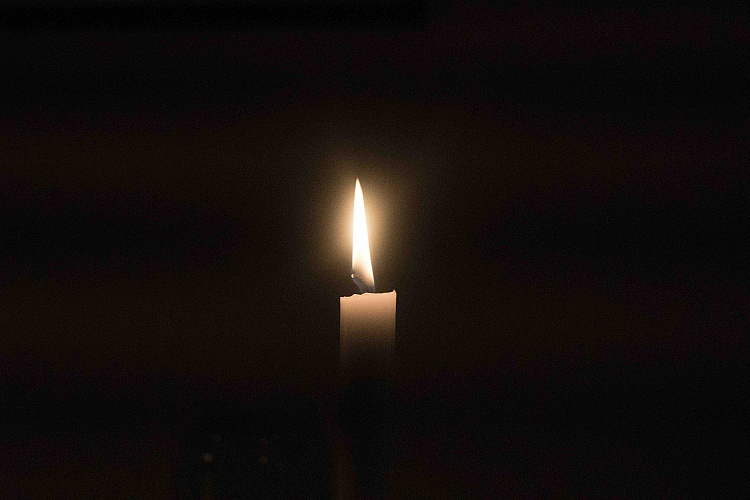 It seemed a cruel irony that someone who lived and breathed peace and compassion lost his life in such a tragic way. I was devastated, to say the least. Even further: During the early days of my grieving process, I rediscovered a message David had sent me, one he felt he needed to write as he was becoming more of a public figure in Davis: “If I’m ever harmed or unable to speak for myself, forgive the perpetrator and help others forgive that person.”
Not long after, I found myself sitting in a courtroom, yards away from the young man who took David’s life. How could I possibly live up to David’s wish, this close, this personal, still deeply embedded in the grieving process?
I had to try to practice forgiveness. In real time.
I kept coming back to that word: “practice.” I knew I couldn’t expect anyone else to feel the same way as me—this was my own journey.
But there were others I could learn from, people who’d gone through incredibly difficult experiences but still managed to somehow tap into a place of empathy and mercy. I studied the work of Holocaust survivor Eva Kor, who forgave the people who killed her family. I listened to stories by Jack Kornfield, including his 12 Principles of Forgiveness. I learned from Fred Luskin that I had to “be at peace with the vulnerability inherent in human life.”
These were lessons I absorbed, integrated, and put into practice. At first, it was easier said than done. But I had these examples and David’s words to guide me. I also discovered things about the young man who killed David—and found unexpected common ground in our life stories.
It may sound ludicrous that someone would be open to identifying a common humanity with someone who’s taken the life of a loved one. But that’s exactly what I found myself doing during the course of the trial in May and June of 2025.
Our mother had schizophrenia. So did the person who took David’s life, Carlos Reales Dominguez. However, Carlos had never been diagnosed as schizophrenic—that happened as a result of receiving a psychiatric evaluation during the trial.
There’s more. My mother was from Jamaica, and Carlos was from El Salvador—we all shared immigrant roots, and all grew up in lower-middle-class families in dangerous neighborhoods. David, Carlos, and I had all been honors students. All of us, in our own ways, were survivors. We’d been accepted into college, with Carlos and me both being first-generation attendees.
We’d overcome so much. It made me view Carlos not only through the same lens as David and me, but also that of many of the kids I’d grown up with, where domestic abuse, sexual abuse, food insecurity, and more accumulated into multiple adverse childhood experiences. These, in turn, can increase the likelihood of negative outcomes in adulthood.
Not only did these shared stories deeply move me—I found myself noticing what it took to reach a place of openness to hearing them. It was, once again, practices, including active listening (granted, potentially inherent in a process that involves testimony and evidence), mindfulness, and deep self-reflection, that helped me navigate pain and reckon not only with my humanity but also with someone else’s.
I had to notice my emotions without judgment, recognize biases, and listen, to not only testimony but also the deeper context of suffering in general.
It didn’t interrupt the grieving process. That wasn’t my goal, anyway, and my therapist told me this wasn’t particularly healthy. But what it did do is help me heal a little faster, grieve a little less, and empathize a lot more.
We all play roles and bring our identities, biases, hurts, wants, and needs to painful situations. Because I was primed for it by David’s request to “forgive the perpetrator,” by the work I’d done to learn more about how to practice forgiveness, and by my understanding of severe mental illness because of my mother, perhaps forgiveness came more easily to me.
But I think anyone’s capable, given the time and space, to reach the same place of openness and empathy. It may not happen overnight. But the possibility, I believe, is there, if one looks for it.
The first trial for Carlos resulted in a hung jury. The retrial is now underway. I’m further along in my grieving process. I’ve even started partnering with transformative justice organizations that believe in fair chances for those who’ve committed crimes, as I believe. As civil rights attorney Bryan Stevenson writes in his book, Just Mercy, “Each of us is more than the worst thing we’ve ever done.”
I’m in a good place, still healing, finding purpose. Still, to take care of myself, I’m limiting my involvement with the trial this time around. Come what may, I’m going to be approaching everything with the resources I’ve gained and integrated—and with clear-eyed compassion.
COMMUNITY REFLECTIONS
SHARE YOUR REFLECTION
5 PAST RESPONSES