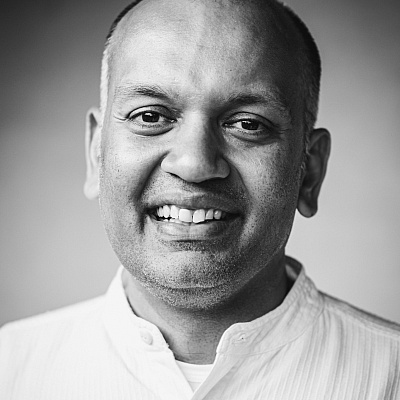
This speech directly addresses the mental health crisis underlying our modern disconnection epidemic. When Nipun cites that the average American has only one real friend and mental health disabilities now outrank physical ones in children, he's diagnosing a wellness emergency that transcends individual symptoms to reveal a collective ailment.
The biochemistry of giving is real medicine: Nipun explains that 'with any act of unconditional service, no matter how small, our bio-chemistry changes, our mind quiets.' This isn't metaphorical—the speech grounds generosity in actual neurological transformation, suggesting that acts of kindness function as a form of preventative mental health care.
Mirror neurons reveal our interconnected nervous systems: The mention that heartbeats synchronize in close proximity when people feel connected, and that mirror neurons make us literally feel each other's emotions, reframes wellness from an individual pursuit to a relational reality. Your emotional state is contagious; your healing can catalyze others' healing.
The 'law of abundance' counters scarcity thinking: Unlike material resources, joy and love multiply when shared. This principle offers a therapeutic antidote to the anxiety-producing zero-sum mindset that dominates modern life—the recognition that smiling more creates more capacity to smile fundamentally rewires our relationship with emotional resources.
Nipun's speech reframes activism itself—moving it from external campaigns to the radical act of rebuilding connection in a disconnected world. His challenge to 'upgrade from Me-Me-Me to We-We-We' positions relationship-building not as soft work but as the core intervention our crises demand.
Structural critique hidden in plain sight: By juxtaposing material progress (lower infant mortality, longer lives) with collapsing social fabric (30-50% suicide increases, 400 PPM carbon), Nipun exposes how our economic system creates material abundance while producing social and ecological devastation. The 'paradox' isn't accidental—it's structural.
Ruby Bridges as a model of transformative justice: The six-year-old praying for those threatening her life exemplifies restorative rather than punitive justice. This story challenges activists to ask: can we wish well for those causing harm? This isn't about being nice—it's about the strategic power of maintaining one's humanity while confronting dehumanizing systems.
Anonymous generosity as anti-capitalist practice: The entrepreneur paying for strangers' meals with strict anonymity directly subverts the transactional logic and personal branding that dominates even charitable giving. ServiceSpace refusing to monetize despite millions of viewers is similarly radical—it proves alternative economic models can sustain themselves.
For an audience in Silicon Valley—the epicenter of 'move fast and break things' capitalism—Nipun's speech is a direct challenge to foundational business assumptions. He walked away from lucrative tech work to test whether generosity could be a sustainable business model, and a decade of results provides compelling data.
The 'hidden agenda' assumption reveals business cynicism: When media insisted ServiceSpace must have ulterior motives for free services, they exposed how thoroughly capitalism has colonized our imagination—we literally cannot believe in non-transactional exchange. Yet ServiceSpace's 450,000 members and sustained operations prove gift economics can scale.
Spontaneous generosity as our default setting: The Harvard study showing that people spontaneously choose to give away unexpected money—before calculation kicks in—challenges Econ 101's core assumption that humans maximize self-interest. If greed is learned and generosity is instinctive, what would businesses designed for our actual nature look like?
Karma Kitchen as a viable business experiment: A restaurant where checks read zero, sustained through 25,000+ meals across multiple cities, isn't just feel-good storytelling—it's proof of concept. The business insight isn't that all restaurants should be free, but that trust-based, pay-it-forward models can create self-sustaining economic ecosystems.
COMMUNITY REFLECTIONS
SHARE YOUR REFLECTION
3 PAST RESPONSES
It is not easy to find this kind of attitude.
After the COVID it seems that Pandoras box, was opened again, and even hope isn't in the box,